

For decades, African prints were positioned on the margins of global fashion—celebrated locally, referenced occasionally, but rarely treated as central to luxury design. Today, that hierarchy is collapsing. From Paris to Milan, New York to London, African textiles, silhouettes, and design philosophies are no longer being “borrowed” as inspiration; they are actively reshaping the language of high-end fashion.
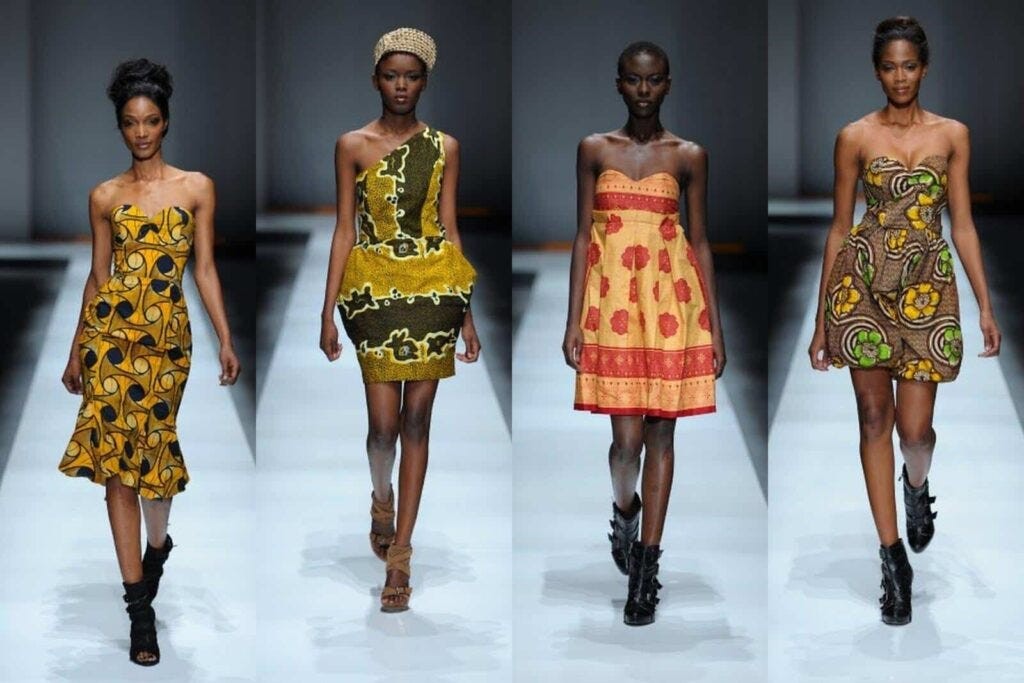
At the center of this shift is the African diaspora. Designers, stylists, musicians, and tastemakers operating between continents have transformed African prints from cultural identifiers into global fashion statements. What we are witnessing is not a trend cycle, but a fashion revolution rooted in identity, history, and cultural confidence.
From Symbolism to Style Authority
African prints—Ankara, Kente, Adire, Aso Oke, Mudcloth—have always carried meaning. They tell stories of lineage, celebration, resistance, and spirituality. What’s changed is how these meanings are now presented on global stages.
Diaspora designers are refusing to strip African prints of context to make them “palatable.” Instead, they are reframing luxury itself—arguing that craftsmanship, symbolism, and cultural depth are not alternatives to high fashion, but its foundation.
Rather than fitting African aesthetics into Western fashion systems, these creatives are expanding the system.
The Diaspora as the Bridge Between Cultures
The African diaspora occupies a unique cultural position: grounded in heritage, yet fluent in global fashion codes. This dual perspective has been critical in translating African prints into contemporary luxury without erasing their roots.
Designers raised between Lagos and London, Accra and New York, Dakar and Paris understand both the symbolism of African textiles and the visual grammar of high-end fashion. The result is clothing that feels globally relevant yet culturally specific.
This kind of cross-border cultural translation reflects broader patterns explored in our analysis of how culture spreads across borders in the internet age, where diaspora communities act as powerful amplifiers rather than cultural filters.
Runways Are No Longer the Starting Point
Another key shift is where influence now begins. Traditionally, fashion trends flowed from elite runways down to street style. Today, the opposite is often true. African prints gained renewed global relevance through streetwear, music videos, social media, and diaspora-led fashion scenes long before luxury houses fully embraced them.
Instagram, TikTok, and digital lookbooks allowed designers to bypass traditional fashion gatekeepers. Stylists working with musicians, creatives, and cultural figures made African prints visible in everyday global culture—clubs, concerts, red carpets, and editorial shoots.
By the time luxury fashion took notice, the culture had already moved.
This acceleration mirrors what we’ve explored in why cultural trends go global faster than ever, where digital platforms compress the distance between local creativity and global recognition.
Music, Fashion, and Cultural Power
Fashion does not move in isolation. The global rise of African music has played a crucial role in repositioning African aesthetics as aspirational rather than niche. Artists wearing African prints on global stages reframed them as symbols of modernity, success, and confidence.
Red carpet appearances, tour wardrobes, and editorial spreads have blurred the lines between music and fashion, turning African prints into global visual language. These moments matter because they normalize African aesthetics in spaces once dominated by Eurocentric design.
This crossover echoes the wider cultural influence detailed in our feature on how African music is shaping global pop culture, where sound, style, and identity move together.
High-End Fashion’s Changing Relationship With African Design
Luxury fashion’s engagement with African prints has also evolved. Where once brands relied on surface-level references, today there is increasing—though still imperfect—attention to collaboration, sourcing, and storytelling.
Some fashion houses now work directly with African artisans or diaspora designers, acknowledging the intellectual and cultural labor behind the aesthetics. While issues of appropriation versus appreciation remain unresolved, the conversation itself signals progress.
African prints are no longer treated as seasonal novelties. They are part of ongoing collections, design philosophies, and brand identities.
Beyond Fabric: A Rewriting of Luxury
At its core, the diaspora fashion revolution is about redefining luxury. African fashion challenges the idea that luxury must be minimal, muted, or detached from history. Instead, it celebrates boldness, narrative, and cultural pride.
This shift resonates with younger global consumers who value meaning over exclusivity. Wearing African prints becomes an act of cultural alignment—not just a fashion choice, but a statement about identity, values, and belonging.
Luxury is no longer just about cost. It’s about story.
Resistance to Cultural Erasure
What makes this movement powerful is its resistance to erasure. Diaspora designers consistently push back against the flattening of African aesthetics into generic “tribal” motifs. They insist on specificity—naming regions, honoring techniques, and preserving cultural context.
This insistence protects African prints from being consumed without credit. It also educates global audiences, turning fashion into a site of cultural learning rather than extraction.
A Revolution Still Unfolding
The influence of African prints on high-end runways is not a destination—it’s an ongoing process. As more African and diaspora designers gain access to global platforms, the visual language of fashion will continue to expand.
What began as cultural survival has become cultural leadership.
The diaspora fashion revolution proves that African aesthetics don’t need validation to be valuable. They already are. The runways are simply catching up.
Appropriation, Appreciation, and the Question of Ownership
As African prints gain prominence on high-end runways, long-standing questions around cultural ownership have become impossible to ignore. For decades, African aesthetics were extracted, repackaged, and sold without credit or compensation. What’s different now is resistance.
Diaspora designers, critics, and audiences are actively challenging who gets to profit from African cultural capital. The conversation has moved beyond aesthetics into ethics—asking not just who wears African prints, but who benefits from them.
This shift is significant. It signals that global fashion consumers are becoming more culturally literate and less tolerant of superficial borrowing. Transparency, collaboration, and acknowledgment are no longer optional; they are expected.
The Rise of African Luxury on Its Own Terms
Another important development is the emergence of African luxury brands that are not seeking validation from Western fashion houses. Designers based in Lagos, Accra, Nairobi, and Johannesburg are building labels that speak directly to global audiences while remaining rooted in local craftsmanship.
These brands challenge outdated assumptions that luxury must be European or minimal. African luxury often embraces bold color, texture, and narrative—elements historically dismissed by Western fashion standards but now increasingly celebrated.
Rather than imitating Paris or Milan, these designers are redefining what luxury can look like when shaped by African sensibilities.
Craftsmanship as Cultural Capital
African prints are not just visual statements; they represent complex systems of craftsmanship. Dyeing techniques like Adire, weaving traditions like Kente, and hand-loomed textiles like Aso Oke involve generational knowledge passed down over centuries.
By bringing these materials into luxury fashion spaces, diaspora designers are elevating craftsmanship as cultural capital. This reframes artisans not as anonymous laborers, but as creative partners whose skills are central to the final product.
When craftsmanship is respected, fashion becomes a collaborative process rather than an extractive one.
Fashion as a Form of Cultural Memory
African prints carry memory. They commemorate rites of passage, political movements, social status, and communal identity. When these prints appear on global runways, they carry fragments of that memory with them.
Diaspora designers often treat fashion as storytelling, using prints and silhouettes to narrate histories that were previously excluded from mainstream fashion narratives. In doing so, they turn clothing into archives—wearable records of culture.
This approach contrasts sharply with trend-driven fashion cycles that prioritize novelty over meaning.
The Influence of Youth and Digital Culture
Much of the diaspora fashion revolution is driven by younger generations who are unapologetic about their cultural identity. Social media has given these creators the power to define style on their own terms, without waiting for institutional approval.
Digital platforms allow designers to showcase collections, explain symbolism, and connect directly with audiences worldwide. This visibility creates community, not just consumers.
Young people are no longer passive recipients of fashion trends—they are active participants shaping them.
Redefining Global Taste
Perhaps the most profound impact of African prints on high-end fashion is how they are redefining global taste. What was once considered “too bold” or “too ethnic” is now seen as sophisticated, intentional, and modern.
This shift challenges the myth that neutrality equals luxury. Instead, it suggests that confidence, cultural specificity, and visual richness are equally—if not more—powerful markers of high-end design.
Global fashion is learning that difference is not a risk; it is an asset.
A Future Rooted in Equity and Expression
The diaspora fashion revolution is still unfolding, and its future will depend on how well the industry balances visibility with equity. Inclusion without ownership is not progress. Collaboration without respect is not evolution.
African prints are influencing high-end runways not because they are fashionable, but because they are meaningful. They offer fashion something it has long lacked: depth.
As the industry continues to evolve, African fashion will not simply be included—it will help define what global luxury becomes.
This is not a moment.
It’s a movement.
