

Few figures of the 21st century symbolize courage and conviction as powerfully as Malala Yousafzai. Shot by extremists as a teenager for advocating girls’ education, she survived, recovered, and transformed her trauma into a global movement. By age 17, she became the youngest-ever recipient of the Nobel Peace Prize. Yet her story is not defined solely by the attack that nearly ended her life. It is defined by the sustained, disciplined advocacy that followed – a lifelong commitment to ensuring every girl has the right to learn.
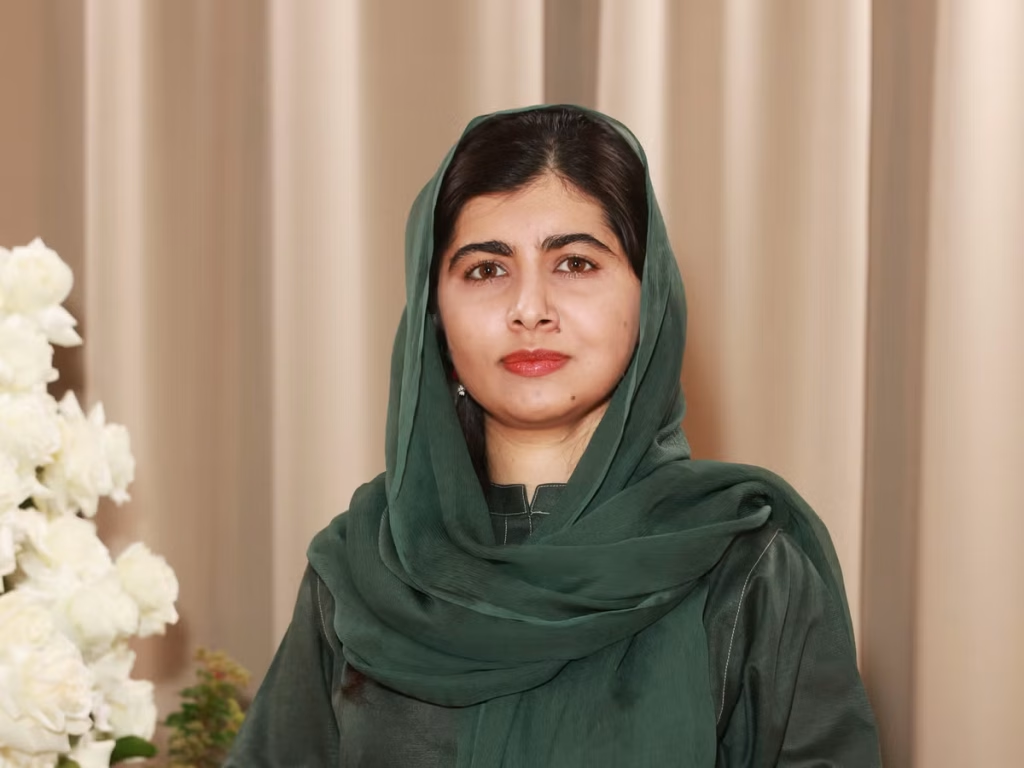
Malala’s biography is a powerful blend of personal resilience, political awakening, global diplomacy, and grassroots activism. From the Swat Valley in Pakistan to the halls of the United Nations, she has redefined what youth leadership looks like in the modern world.
This comprehensive biography explores her early life, the rise of Taliban extremism in her region, the attack that shook the world, her recovery and global advocacy, the creation of the Malala Fund, her education at Oxford, her marriage, and her continuing impact on global education policy.
Quick Facts About Malala Yousafzai
-
Full Name: Malala Yousafzai
-
Date of Birth: July 12, 1997
-
Place of Birth: Mingora, Swat Valley, Pakistan
-
Nationality: Pakistani
-
Known For: Girls’ education advocacy
-
Award: Nobel Peace Prize (2014)
-
Organization Founded: Malala Fund
-
Education: University of Oxford
-
Degree: Philosophy, Politics and Economics (PPE)
Early Life in Swat Valley
Malala Yousafzai was born in Mingora, in Pakistan’s picturesque Swat Valley. The region, once known for its beauty and cultural vibrancy, would later become a battleground for extremist control.
Her father, Ziauddin Yousafzai, was a school owner and outspoken advocate for education. He played a decisive role in shaping Malala’s worldview. From a young age, she attended school regularly and was encouraged to speak openly about social issues.
In a society where girls’ education often faced cultural barriers, Malala’s home was different. Books were central to family life. Debate was encouraged. Ambition was supported.
Her name, inspired by Malalai of Maiwand – a Pashtun heroine – seemed almost prophetic.
The Rise of the Taliban in Swat
By the mid-2000s, the Taliban began gaining control over the Swat Valley. Schools, particularly girls’ schools, became targets. Hundreds were destroyed. Public announcements declared that girls were forbidden from attending classes.
The atmosphere shifted from vibrant to fearful.
At just 11 years old, Malala began speaking publicly about her right to education. In 2009, she started writing a blog for the BBC Urdu service under a pseudonym, describing life under Taliban rule.
Her words were simple but powerful. She wrote about fear, about missing school, and about her desire to learn.
Her identity eventually became public, and she began appearing in documentaries and interviews. While many praised her bravery, the visibility also placed her in danger.
The Assassination Attempt
On October 9, 2012, Malala was shot in the head by a Taliban gunman while riding a school bus home.
The attack shocked Pakistan and the world. She was airlifted to a military hospital in Pakistan and later transferred to the United Kingdom for specialized treatment.
Doctors performed multiple surgeries to repair damage to her skull and restore hearing. The world watched anxiously as the young activist fought for survival.
Her recovery was slow but remarkable.
The attack, intended to silence her, amplified her voice globally.
Global Outpouring of Support
World leaders, celebrities, and activists condemned the attack. Vigils were held across continents. The phrase “I am Malala” became a rallying cry for girls’ education.
Her survival turned her into a symbol. Yet Malala consistently redirected attention toward the broader issue – millions of girls worldwide denied schooling.
In 2013, she delivered a speech at the United Nations on her 16th birthday. Declaring that “one child, one teacher, one book, and one pen can change the world,” she positioned education as a universal human right.
Her speech marked her transition from survivor to global leader.
The Nobel Peace Prize
In 2014, Malala Yousafzai was awarded the Nobel Peace Prize, becoming the youngest laureate in history. She shared the honor with Indian child rights activist Kailash Satyarthi.
The Nobel Committee recognized her struggle against the suppression of children and young people and for the right of all children to education.
At just 17, she stood on one of the world’s most prestigious stages, advocating not for herself, but for millions of girls still excluded from classrooms.
Her Nobel Prize cemented her place in global history.
Founding the Malala Fund
Malala and her father co-founded the Malala Fund, a nonprofit organization dedicated to ensuring 12 years of free, safe, and quality education for every girl.
The organization works in regions where girls face the greatest barriers, including parts of Africa, Asia, Latin America, and the Middle East.
Rather than imposing solutions from the outside, the Malala Fund supports local education activists and grassroots leaders.
This model reflects Malala’s belief that sustainable change must come from communities themselves.
Education at Oxford
Despite global fame, Malala prioritized her own education. In 2017, she began studying Philosophy, Politics and Economics at the University of Oxford.
Balancing academic life with international activism required discipline. She attended lectures, participated in student activities, and continued global advocacy work.
In 2020, she graduated from Oxford, describing the moment as bittersweet and joyful.
Her academic journey reinforced her credibility as both an activist and scholar.
Marriage and Personal Life
In 2021, Malala married Asser Malik in a private ceremony in Birmingham, UK.
Her announcement sparked global conversation, particularly in communities where early marriage remains common. Malala has previously spoken critically about child marriage and the importance of women having agency in life decisions.
Her marriage represented personal choice and partnership, consistent with her advocacy for women’s rights.
Despite intense public scrutiny, she maintains a relatively private personal life.
Advocacy on the Global Stage
Malala’s activism extends beyond symbolic speeches.
She has met with presidents, prime ministers, and global institutions. She has advocated for education funding in refugee camps, conflict zones, and underserved rural communities.
She has spoken about the education crisis in Afghanistan following the Taliban’s return to power, consistently calling for international pressure to reopen schools for girls.
Her advocacy combines moral clarity with policy engagement. She understands budgets, legislative frameworks, and international diplomacy.
Books and Media Presence
Malala co-authored her memoir, I Am Malala, which became an international bestseller. The book offers detailed insight into her childhood, the attack, and her recovery.
She has also written children’s books and educational materials designed to inspire young readers.
In addition, she has produced documentaries and media projects highlighting girls’ stories worldwide.
Her communication strategy blends storytelling with data-driven advocacy.
Criticism and Challenges
Like many high-profile activists, Malala has faced criticism.
Some critics in Pakistan have accused her of being overly aligned with Western institutions. Others question whether global recognition has overshadowed local activists.
Malala has responded by emphasizing that education is not a Western value but a universal human right.
Navigating political sensitivities while maintaining global support remains a delicate balance.
Net Worth and Influence
Malala’s income stems from book sales, speaking engagements, and her foundation’s work. While estimates vary, her primary focus remains advocacy rather than wealth accumulation.
Her true power lies in influence.
She has shifted global education discourse, influenced funding priorities, and inspired youth activism worldwide.
Few individuals so young have had comparable global impact.
Legacy and Long-Term Impact
Malala Yousafzai’s legacy is already substantial.
She represents:
-
Youth activism at its most effective
-
The power of education as liberation
-
The resilience of the human spirit
-
The importance of female leadership
Her survival changed global conversations about extremism and girls’ rights.
Her sustained advocacy continues to influence policy debates across continents.
Unlike many figures who fade after a singular moment of fame, Malala has built institutional impact through the Malala Fund and ongoing diplomatic engagement.
Her story is not one of tragedy alone. It is one of transformation.
Frequently Asked Questions
Why is Malala Yousafzai famous?
She is famous for advocating girls’ education in Pakistan, surviving a Taliban assassination attempt, and becoming the youngest Nobel Peace Prize laureate.
How old was Malala when she won the Nobel Prize?
She was 17 years old when she received the Nobel Peace Prize in 2014.
What does the Malala Fund do?
The Malala Fund supports local education activists and works to ensure 12 years of free, quality education for girls worldwide.
Where did Malala study?
She studied Philosophy, Politics and Economics at the University of Oxford.
Malala Yousafzai’s biography is a testament to courage, conviction, and consistency. From a schoolgirl in Swat Valley to a Nobel laureate and global policy advocate, her journey defies expectations.
She has demonstrated that age does not limit leadership and that a single voice, when rooted in truth and persistence, can influence the world.
In an era marked by division and conflict, Malala stands as a reminder that education remains one of the most powerful tools for peace, equality, and progress.
Her story is still unfolding, but its impact is already historic.
This biography is part of Loaded Culture’s exploration of global figures shaping identity, leadership, and cultural evolution. Discover more profiles in our Biography or explore broader cultural analysis on the LoadedCulture, where history, influence, and modern culture connect.
