

Paul Daniel “Ace” Frehley, forever etched in rock history as “The Spaceman” or “Space Ace,” was an American guitarist, songwriter, occasional vocalist, and co-founder of the groundbreaking rock band KISS. Born on April 27, 1951, in The Bronx, New York City, Frehley brought a unique blend of melodic, blues-tinged lead playing, innovative stage effects, and cosmic theatricality to the hard rock and glam metal landscape of the 1970s and beyond. His soaring, singable solos, thick Gibson Les Paul tone, and pyrotechnic guitar tricks—like smoking, rocket-launching, and light-flashing instruments—helped define KISS’s larger-than-life spectacle and made live rock shows an immersive experience rather than just music. As a founding member, he appeared on the band’s first nine studio albums (all certified gold, platinum, or multi-platinum in the U.S.) and contributed enduring classics like “Cold Gin,” “Shock Me,” and “Rocket Ride.” Inducted into the Rock and Roll Hall of Fame in 2014 as a KISS co-founder, Frehley influenced generations of guitarists with his accessible yet inventive style, inspiring players from thrash metal to alternative rock. He passed away on October 16, 2025, at age 74 in Morristown, New Jersey, from blunt trauma injuries to the head sustained in an accidental fall at his home studio, which caused a fractured skull, subdural hematoma (brain bleed), contusions, hemorrhages, and a subsequent stroke. His death was ruled accidental by the Morris County Medical Examiner.
Early Life & Background
Frehley grew up in a working-class Bronx household with Cherokee heritage through his mother, navigating a turbulent childhood filled with family strains and street life. He ran with a gang as a teenager but found solace in music, teaching himself guitar starting at age 13. His early influences included Jimi Hendrix (whose raw expressiveness shaped his vibrato and effects use), Eric Clapton, Pete Townshend, Leslie West of Mountain, and even Robby Krieger of The Doors—whose solo he later recreated note-for-note on KISS’s “She.”
By his late teens, Frehley had gigged in local bands like Molasses and Dust while holding day jobs, including as a draftsman. He briefly worked as a roadie, gaining firsthand exposure to live performance energy. The nickname “Ace” emerged from his teenage charisma and confidence with peers. This no-frills, self-taught background gave his playing an authentic, unpolished edge that contrasted with the band’s eventual theatrical excess, grounding his cosmic persona in real Bronx grit.
Joining KISS and Rise to Fame
In late 1972, Frehley answered a Village Voice ad from Paul Stanley and Gene Simmons seeking a lead guitarist with “flash and ability.” Despite arriving mismatched (and possibly hungover, per varying accounts), his talent won him the spot, completing the classic lineup with Stanley, Simmons, and Peter Criss. The band debuted in 1973, quickly adopting makeup and pyrotechnics to stand out.
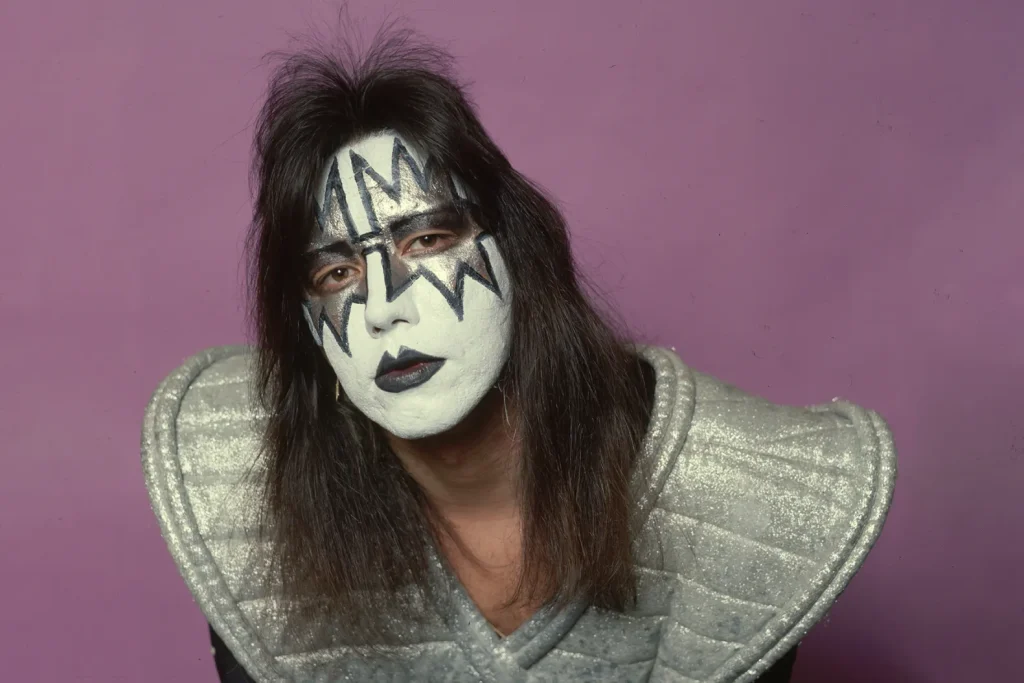
Frehley created the Spaceman character—silver makeup with star accents around the eyes—drawing from his lifelong fascination with space, sci-fi, and astronomy. He pioneered special-effects guitars that smoked, shot rockets, emitted flames, or pulsed lights in sync with the music, turning performances into visual spectacles. KISS’s breakthrough arrived with Alive! (1975), which captured their explosive live energy and propelled them to stardom.
Frehley’s songwriting shone on tracks like “Cold Gin” (his first major credit, a bluesy riff monster), “Parasite,” “Shock Me” (his vocal and solo showcase, done in one take with flange and wah-wah flair), and “Rocket Ride” (a 1977 metal anthem laced with innuendo). The 1978 simultaneous solo albums marked a peak; his self-titled effort outsold the others, achieving platinum status thanks to “New York Groove” (a Russ Ballard cover that hit No. 13 on the Billboard Hot 100). From the 1974 debut through 1982’s Creatures of the Night, his contributions helped drive KISS’s commercial dominance.
Departures, Solo Career, and Reunions
Creative differences, substance struggles, and the band’s pop-metal shift prompted Frehley’s 1982 exit. He formed Frehley’s Comet in the mid-1980s, releasing the self-titled 1987 album (featuring “Rock Soldiers” and “Into the Night”) and Second Sighting (1988). Rebranding under his name, he issued Trouble Walkin’ (1989).
After a hiatus marked by personal challenges, he returned with Anomaly (2009), followed by Space Invader (2014, peaking at No. 9 on the Billboard 200—the highest-charting solo album by any past or present KISS member), Spaceman (2018), cover projects Origins Vol. 1 (2016) and Vol. 2 (2020) with guests like Slash, Lita Ford, and John 5, and 10,000 Volts (2024), which topped Billboard’s Hard Music and Rock Album charts with energetic tracks like “Walkin’ on the Moon.”
He rejoined KISS for the 1996 makeup reunion tour, restoring their classic image amid renewed interest from bands like Nirvana and Weezer. He left again in 2002 amid tensions but maintained a solo presence.
What Made Ace Frehley’s Style Unique?
Frehley’s guitar work stood apart through:
- Melodic, Vocal-Like Solos: Prioritizing catchy, singable phrases over technical speed, as in “Shock Me,” “Detroit Rock City,” and “Rocket Ride.”
- Effects Innovation: Pioneering smoking guitars, pyrotechnics, and synchronized lights, merging technology with showmanship.
- Tone and Gear: A devoted Gibson Les Paul player (often with Marshall amps), he crafted thick, sustaining tones using wah-wah, delay, and flange, channeling Hendrix’s expressiveness into hard rock punch.
- Songwriting Depth: Bluesy riffs and storytelling added grit to KISS’s anthems, like the streetwise “Cold Gin.”
Ranked in Guitar World’s “100 Greatest Heavy Metal Guitarists” and “50 Greatest Guitar Solos,” his influence is profound. Quotes from admirers highlight his impact: Dimebag Darrell tattooed Frehley’s image; Tom Morello called him his first guitar hero; Foo Fighters covered “Ozone.” Marty Friedman, Richie Kotzen, Paul Gilbert, and others cited his natural vibrato and unorthodox style as reasons they picked up the instrument. Frehley himself reflected, “If I had known I would influence so many guitarists, I would have practiced more,” underscoring his humble, instinctive approach.
Challenges and Personal Struggles
Frehley’s path included battles with addiction, accidents, and band conflicts, detailed candidly in his 2011 New York Times bestselling memoir No Regrets. Health issues persisted; in September 2025, he suffered two falls—one minor, the second severe—leading to hospitalization, life support, and his eventual passing on October 16 after family decisions around ventilators.
Legacy and Influence
Frehley’s contributions reshaped rock by making theatricality central to live performance and proving spectacle could amplify music. His solos inspired metal, glam, and alternative players alike. Post-death tributes included KISS honoring him with a candlelit moment on the KISS Kruise (their first show in nearly two years), a private memorial in Yonkers attended by Stanley, Simmons, and Criss, and a special tribute at the 2026 Pre-NAMM All Star Jam featuring Frehley’s Comet alumni like Tod Howarth. Fans called for Grammys recognition, and reflections poured in from peers and journalists.
Even after KISS’s catalog sale and final tours (which he opted out of), his Spaceman persona endures in every cosmic riff, starry stage moment, and inspired guitarist. Ace wasn’t merely a player—he was a trailblazer who transformed Bronx roots into interstellar legend, showing that rock’s most enduring icons often rise from ordinary beginnings to create timeless, electrifying echoes across generations.
Frequently Asked Questions (FAQs)
1. What was Ace Frehley’s real name and why was he called “Ace”? His birth name was Paul Daniel Frehley. The nickname “Ace” came from his teenage charisma and confidence, particularly his success with women among peers.
2. How did Ace Frehley die? Ace Frehley died on October 16, 2025, at age 74 from blunt trauma injuries to the head caused by an accidental fall at his home studio in Morristown, New Jersey. The fall resulted in a fractured skull, subdural hematoma (brain bleed), contusions, hemorrhages, and a stroke. The Morris County Medical Examiner ruled it accidental. He was placed on life support after the incident, and family decisions led to its removal.
3. What was Ace Frehley’s role in KISS? He was a founding member and original lead guitarist (1973–1982, reunion 1996–2002), known as the Spaceman. He co-wrote key songs like “Cold Gin,” “Shock Me,” and “Rocket Ride,” and pioneered the band’s pyrotechnic guitar effects.
4. Did Ace Frehley have a successful solo career? Yes—his 1978 solo album went platinum with “New York Groove” (No. 13 hit). Later releases like Space Invader (2014) hit No. 9 on Billboard 200 (highest for any KISS member solo), and 10,000 Volts (2024) topped rock charts. He released multiple albums post-KISS, including cover projects with guests like Slash.
5. Why did Ace Frehley leave KISS multiple times? The first departure in 1982 stemmed from substance abuse, creative differences, and the band’s pop-metal direction. The 2002 exit involved ongoing tensions with Paul Stanley and Gene Simmons. Despite reunions, personal and professional frictions persisted.
6. What made Ace Frehley’s guitar style influential? His melodic, singable solos (prioritizing feel over speed), innovative effects (smoking/rocket guitars), and thick Les Paul tone inspired guitarists like Dimebag Darrell, Tom Morello, and members of Foo Fighters. He blended Hendrix expressiveness with hard rock aggression.
7. Was Ace Frehley inducted into the Rock and Roll Hall of Fame? Yes, in 2014 as a KISS co-founder, alongside Stanley, Simmons, and Criss.
8. What projects was Ace Frehley working on before his death? He was active with recent music and had been collaborating on Aceland: Artifacts and Memories of a Rock ‘n’ Roll Life, a 550+ page oral history book (with Ken Sharp and Julian Gill) set for 2026 release, featuring interviews spanning his career.
9. Did Ace Frehley ever express interest in rejoining KISS for their final tours? He discussed possibilities in interviews but declined involvement in KISS’s later farewell activities, citing past tensions and preferring his solo path.
10. How is Ace Frehley remembered today? As a trailblazer who turned theatrical rock into spectacle, his cosmic persona and riffs endure in rock culture, with tributes highlighting his resilience, creativity, and foundational role in KISS’s legacy.
Explore more inspiring stories of global figures in our Biography section on Loaded Culture, where we document the people redefining global culture today.
