

When Afrobeats Becomes a Cultural Bridge: Davido’s Sierra Leone Moment Explained
In the vibrant landscape of global music, few moments capture cultural fusion as powerfully as Davido’s performance in Sierra Leone on December 22, 2025. On the surface, it was another stop on his 5ive Alive World Tour. In reality, it was something deeper a living example of how Afrobeats now functions as a unifying cultural language across borders.
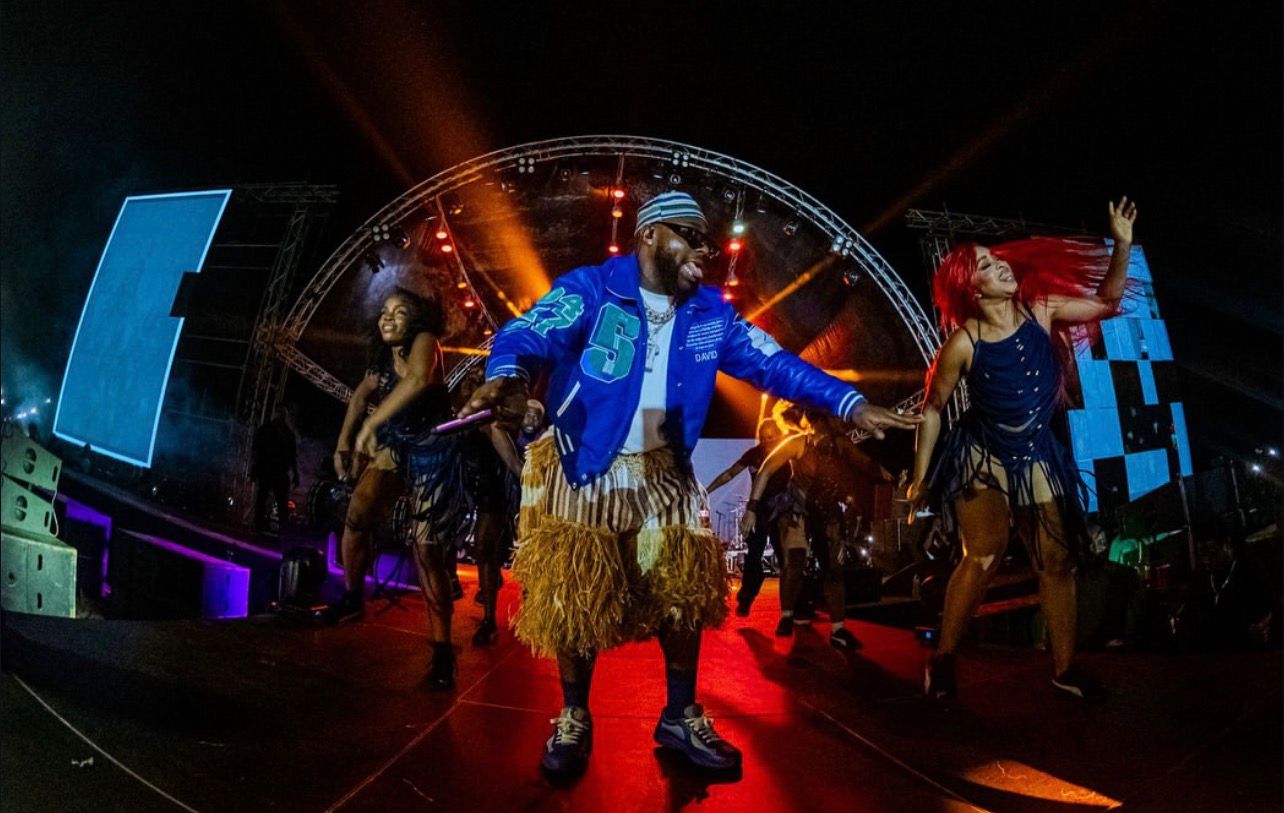
Taking the stage at Sugarland Beach in Freetown during the Gbamgbaode Festival — a celebration tied to AFCON 2025 festivities — Davido didn’t just perform hits. He embodied a cultural exchange. Dressed in a custom outfit blending modern stage aesthetics with traditional Sierra Leonean elements, he electrified thousands of fans while quietly making a statement: Afrobeats is no longer just Nigerian music. It is African expression with global resonance.
This “Sierra Leone moment,” as fans quickly dubbed it online, was not merely about crowd size or setlists. It was about identity, heritage, and connection — and why Afrobeats increasingly feels like a bridge rather than a genre.
More Than a Concert: Context Behind the Moment
Fresh from a high-profile AFCON kickoff appearance in Morocco on December 20, Davido arrived in Freetown with little rest, reinforcing the relentless pace that defines his career. Anticipation had been building for weeks, and by the time he stepped on stage, the event had already sold out. Estimates placed attendance at over 4,000 people, with thousands more engaging online as videos flooded social platforms.
Fans sang along to tracks from his latest album 5IVE alongside career-defining classics. But what elevated the night beyond a tour stop was Davido’s intentional embrace of local culture. The following day, he paid a courtesy visit to Julius Maada Bio, referring to Sierra Leone as his “second home” and hinting at a future stadium-scale return.
These gestures signaled something important: this wasn’t a transactional appearance. It was participation.
The Outfit That Spoke Louder Than Words
Central to the symbolism of the night was Davido’s outfit — a carefully designed fusion honoring Sierra Leonean heritage. Crafted by Sierra Leonean-American designer Hollyandroo in collaboration with Freetown-based creative Mumini, the ensemble prominently featured raffia, a palm-fiber material deeply embedded in West African tradition.
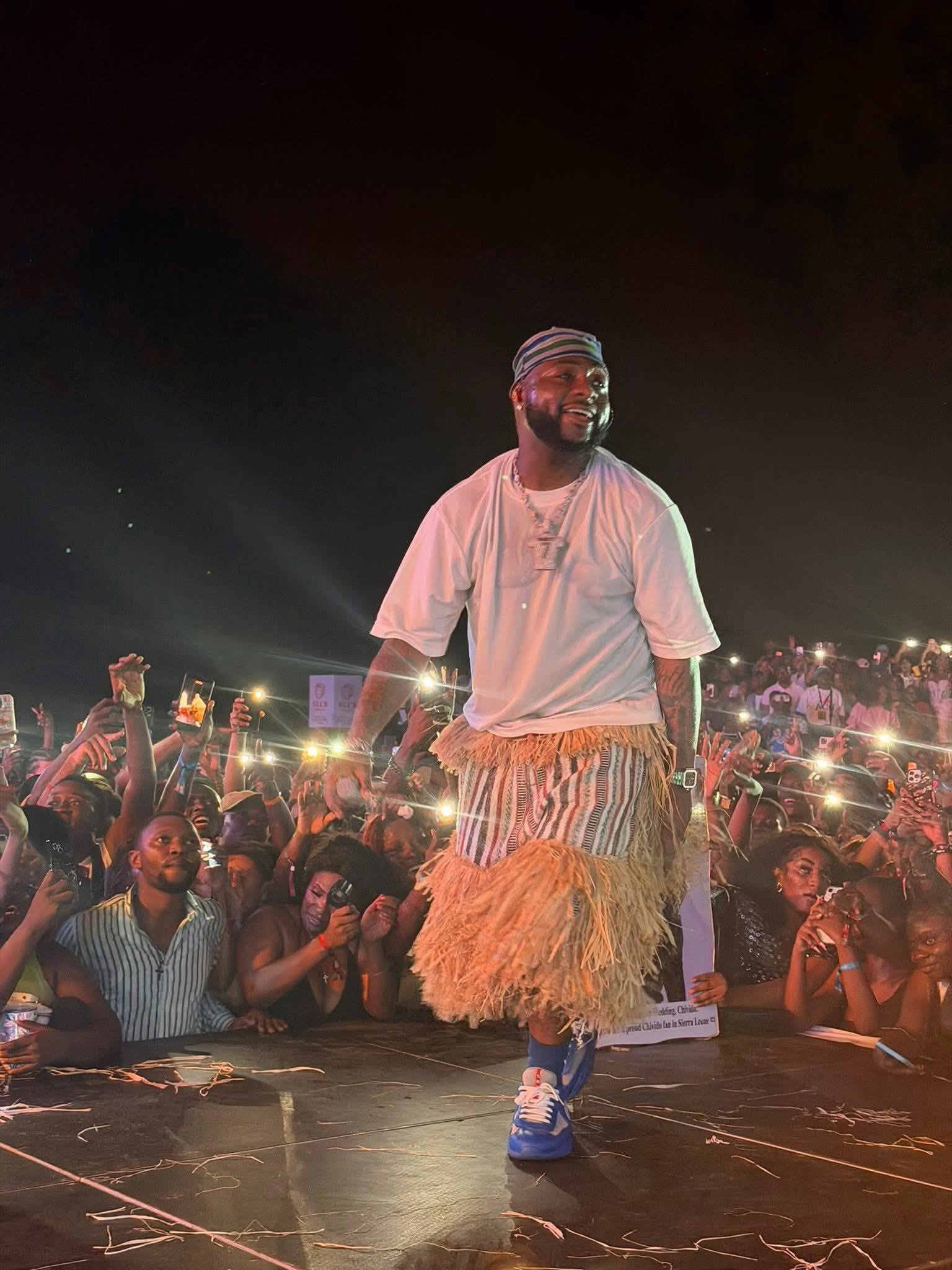
In Sierra Leone, raffia carries cultural weight. It is woven into masquerades, ceremonial attire, and artistic expressions among ethnic groups such as the Mende and Temne. It symbolizes continuity, craftsmanship, and communal memory. By integrating raffia into a contemporary performance outfit, Davido didn’t dilute tradition — he translated it for a global stage.
This wasn’t cultural borrowing for aesthetics. It was amplification. The designers received global visibility, and local culture was framed not as “exotic,” but as modern, relevant, and powerful.
That distinction matters.
Afrobeats as a Cultural Connector, Not Just a Sound
Afrobeats’ global rise is often discussed in terms of charts, streams, and collaborations. But its deeper influence lies in how it connects cultures without flattening them.

Rooted in Nigerian highlife, fuji, jùjú, and later shaped by hip-hop, dancehall, and electronic music, Afrobeats evolved into a hybrid form that feels both local and universal. Artists like Davido, Wizkid, Burna Boy, and Tems didn’t just export sound — they exported African presence.
In places like Sierra Leone, a country with a complex post-conflict history, Afrobeats operates as a unifying force. It creates shared joy, restores pride, and reframes African narratives away from deficit toward creativity and celebration.
Davido’s performance illustrated this clearly: Nigerian music performed in Sierra Leone, wrapped in Sierra Leonean cultural symbolism, embraced by local fans, amplified globally. That is cultural circulation in real time.
Davido’s Role as a Cultural Ambassador
Davido has long positioned himself as more than an entertainer. His career reflects intentional cultural bridging — from introducing African rhythms to Western pop audiences, to collaborating across borders, to representing African music on global institutional stages.
His 5IVE album itself leans into this mission, blending sounds, languages, and influences designed to travel without losing authenticity. In Sierra Leone, that philosophy moved from studio to stage.
By collaborating with local designers and publicly honoring the country’s leadership and people, Davido reinforced Afrobeats’ expanding role: artist as cultural diplomat.
Why This Moment Matters Beyond Sierra Leone
Africa is not culturally monolithic. With 50+ nations and thousands of languages, unity often feels abstract. Afrobeats challenges that fragmentation by creating a shared cultural rhythm — one that transcends colonial borders and linguistic divides.
Davido’s Sierra Leone appearance symbolized this pan-African connectivity. It also resonated deeply with the diaspora, where many young Africans navigate hybrid identities daily. Online reactions reflected pride, recognition, and belonging.
Beyond symbolism, moments like this have tangible impact: boosting local creative economies, spotlighting designers, encouraging cultural tourism, and shifting global perception of African culture from “emerging” to leading.
Afrobeats as a Living Bridge
Critics sometimes worry about cultural commodification when global stars engage with local traditions. But intent and execution matter. Davido’s approach — collaboration, credit, and respect — demonstrates how Afrobeats can elevate culture rather than extract from it.
This is why Afrobeats continues to grow: it adapts without erasing roots. It travels without losing identity.
Davido’s Sierra Leone moment was not about headlines or hype. It was about what Afrobeats has become — a medium through which African cultures speak to one another and to the world.
More than music, Afrobeats now functions as cultural dialogue, identity affirmation, and collective memory in motion. And in moments like this, it reminds us that sound can do what politics often cannot: bring people together without asking them to be the same.
One beat. Many cultures. Shared rhythm.
