

Ajit Doval is one of India’s most influential intelligence officers and strategic thinkers, widely regarded as a key architect of the country’s national security policies. As the National Security Advisor (NSA) to the Prime Minister of India, Doval has played a central role in shaping India’s counter-terrorism strategy, border management policies, and intelligence operations. His career spans decades of service in India’s intelligence community, marked by both operational expertise and strategic foresight.
Known for his discreet style, meticulous planning, and hands-on involvement in critical operations, Ajit Doval is often credited with redefining India’s approach to internal and external security threats. His work has earned him recognition not only within India but also among global security and strategic studies experts.
Early Life and Education
Ajit Doval was born on January 20, 1945, in Uttarakhand (then part of British India). He grew up in a modest family with a strong emphasis on discipline and education. Doval completed his higher education at Agra University, earning a degree in mathematics and economics, which provided him with analytical skills that later proved valuable in intelligence work.
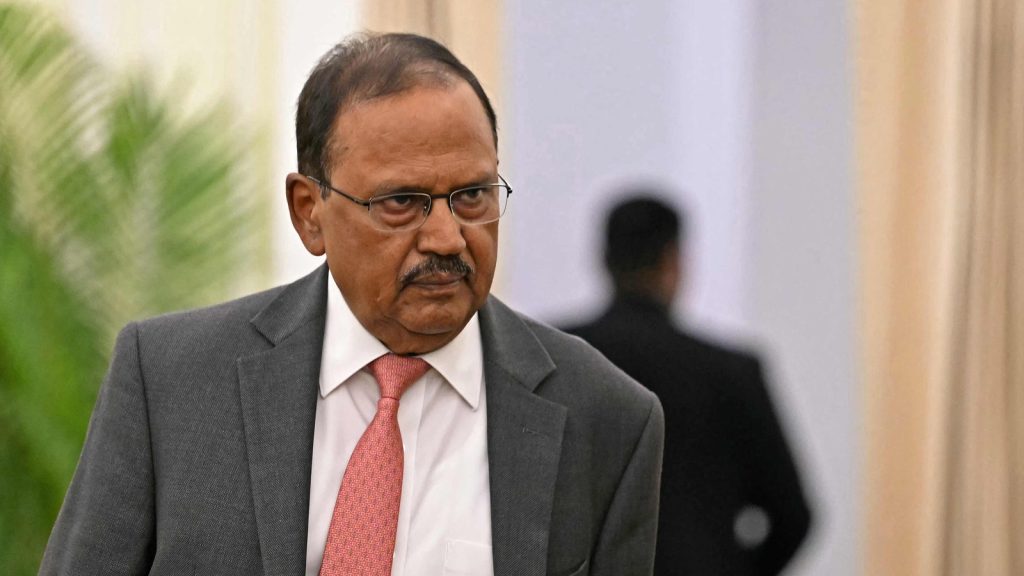
Following his graduation, he joined the Indian Police Service (IPS) in the Kerala cadre in 1968. His early postings included assignments in various law enforcement capacities, but it was his aptitude for strategy and field intelligence that distinguished him from his peers.
Early Career in Intelligence
Ajit Doval’s intelligence career began in the Intelligence Bureau (IB), India’s premier internal security and counter-intelligence agency. Over the years, he undertook numerous field assignments, often involving high-risk operations in conflict zones. His ability to operate in hostile environments and his success in managing complex intelligence tasks quickly brought him to the attention of senior officials.
During his tenure in the IB, Doval was involved in operations related to insurgencies in Punjab and the North-East, gaining expertise in counter-terrorism, negotiation, and tactical planning. His approach combined analytical rigor with practical field experience, making him a highly effective intelligence officer.
Involvement in Counter-Terrorism Operations
One of the defining features of Ajit Doval’s career has been his hands-on role in counter-terrorism operations. He gained national recognition for his leadership during several high-profile missions:
-
Operation Black Thunder (1988–1990): Doval played a pivotal role in planning and executing this operation to flush out militants from the Golden Temple in Amritsar. Unlike previous strategies, the operation minimized casualties while effectively neutralizing the threat.
-
Counter-insurgency in Jammu & Kashmir: Over decades, Doval contributed to intelligence strategies aimed at reducing militant activity and coordinating between security forces and local authorities.
-
Cross-border strategic operations: He is known for advocating proactive measures against terrorist networks operating across India’s borders, emphasizing intelligence-led actions.
Doval’s operational experience earned him a reputation as an officer willing to personally engage in high-stakes missions. His courage and discretion became central to his professional identity.
National Security Advisor
Ajit Doval was appointed as India’s National Security Advisor in May 2014 under Prime Minister Narendra Modi. In this role, he oversees the National Security Council Secretariat, advising the Prime Minister on strategic and security matters. His tenure as NSA has been characterized by:
-
A focus on counter-terrorism and internal security
-
Strengthening India’s intelligence apparatus
-
Advocating a proactive and assertive national security policy
-
Strategic diplomacy and coordination with defense and foreign policy bodies
Under his guidance, India has emphasized preemptive intelligence operations, enhanced border security, and coordinated action against cross-border threats. Doval’s approach combines pragmatism with strategic foresight, reflecting his decades of experience in the field.
Key Contributions and Strategic Initiatives
Ajit Doval has been instrumental in several landmark security initiatives:
-
Surgical Strikes (2016): Doval played a central role in planning and coordinating cross-border operations against terrorist camps in Pakistan-occupied Kashmir, a move that drew global attention.
-
Strengthening Coastal and Border Security: Under his guidance, India has improved monitoring and intelligence systems along its extensive borders and coastline.
-
Counter-terrorism Policy Framework: Doval has advocated integrated intelligence, enhanced technological surveillance, and better coordination among security agencies.
-
National Security Council Reforms: He modernized the council’s processes, ensuring rapid decision-making during crises.
His efforts have positioned India as a more assertive and responsive player in regional security matters.
Intelligence Philosophy and Strategic Vision
Ajit Doval is widely recognized for his unique intelligence philosophy, which blends traditional espionage with modern technological tools. Unlike conventional approaches that rely heavily on reactive measures, Doval emphasizes proactive intelligence gathering, risk assessment, and preemptive action. He believes that timely information, when acted upon decisively, can prevent security crises before they escalate.
A hallmark of Doval’s approach is the integration of field intelligence with policy decision-making. He is known to personally review operational plans, coordinate between agencies, and ensure that field officers receive clear directives. His philosophy combines patience, meticulous planning, and a willingness to take calculated risks when national security is at stake.
In addition, Doval advocates human intelligence (HUMINT) as a critical complement to technological surveillance. He has often stressed that on-the-ground insights from local communities, informants, and field operatives are invaluable for understanding evolving threats, particularly in regions affected by insurgency and cross-border terrorism.
Regional Security and Border Management
Ajit Doval’s influence extends to India’s border strategy, which covers some of the most challenging terrains in the world, including the Himalayas, the Thar Desert, and the northeastern frontiers. Recognizing the complexities of border security, he has championed a multi-layered approach that combines:
-
Advanced surveillance technology, including drones, sensors, and satellite monitoring
-
Enhanced patrols and rapid-response units
-
Strategic infrastructure development along sensitive borders
-
Strengthened coordination between the army, paramilitary forces, and intelligence agencies
Under Doval’s guidance, India has implemented modernized border management systems that improve both defensive readiness and the ability to conduct precise operations when threats arise. His policies have been particularly influential in managing tensions with Pakistan and China, ensuring that intelligence-led interventions remain central to India’s defense doctrine.
Counter-Terrorism Doctrine
Ajit Doval’s counter-terrorism approach has become a blueprint for India’s security apparatus. Key principles include:
-
Zero tolerance for terrorism: Doval emphasizes swift action against identified terrorist networks, including preemptive strikes when necessary.
-
Integration of intelligence agencies: He has strengthened coordination between the Intelligence Bureau, Research and Analysis Wing (RAW), National Investigation Agency (NIA), and state police forces.
-
Cross-border vigilance: Doval’s policies focus on tracking and dismantling networks that operate from foreign territories, particularly those with links to global terrorist organizations.
-
Legal and diplomatic support: Operations are often paired with strategic diplomacy and legal frameworks to maintain international legitimacy and minimize unintended fallout.
This doctrine has guided high-profile operations, such as the 2016 surgical strikes and subsequent anti-terror measures along the India-Pakistan border, as well as intelligence-driven counter-insurgency campaigns in the Northeast and Jammu & Kashmir.
Influence on Foreign Policy and Strategic Partnerships
Beyond operational intelligence, Doval plays a key role in shaping India’s foreign policy from a security perspective. He serves as an adviser on issues including:
-
Bilateral and regional security agreements
-
Counter-terrorism cooperation with neighboring countries
-
Maritime security in the Indian Ocean region
-
Cybersecurity and emerging security threats
Doval’s emphasis on strategic autonomy ensures that India maintains flexibility in foreign policy while protecting national interests. His guidance has influenced agreements with countries such as the United States, Israel, and ASEAN nations on intelligence sharing, defense collaboration, and joint counter-terrorism initiatives.
Public Perception and Leadership Style
Despite his global influence, Ajit Doval remains a largely private figure. He avoids the limelight, preferring operational work over public appearances. This discretion adds to his reputation as a hands-on strategist who prioritizes action over rhetoric.
Colleagues often describe him as disciplined, analytical, and decisive. His leadership style combines firm directives with an appreciation for field-level expertise. Officers under his guidance are encouraged to innovate and take calculated initiatives, fostering a culture of professionalism and accountability within India’s intelligence community.
Long-Term Legacy
Ajit Doval’s impact on India’s national security is profound and multi-dimensional. He has transformed intelligence operations from largely reactive mechanisms to proactive, strategic tools that shape both domestic and foreign policy. His operational successes, particularly in counter-terrorism, have enhanced India’s global standing as a responsible yet assertive security actor.
His legacy also includes the modernization of India’s intelligence agencies, emphasis on multi-agency coordination, and mentorship of a new generation of security officers. Many young officers now study Doval’s methods as case studies in operational excellence, strategic planning, and crisis management.
Beyond tactical achievements, Doval represents a shift in Indian security thinking—toward assertive, intelligence-driven policymaking that integrates field insights, technology, and strategic diplomacy. For decades to come, his philosophy is likely to shape India’s approach to national and regional security.
Public Persona and Leadership Style
Ajit Doval is known for his low-profile demeanor. He rarely gives interviews and avoids public appearances, letting his work speak for itself. His leadership style emphasizes operational discipline, secrecy, and meticulous planning. Analysts often describe him as a “hands-on strategist” who combines field experience with policy-level decision-making.
Despite his reserved public image, Doval commands immense respect within India’s security and defense community. He is seen as a bridge between field intelligence operations and high-level policy implementation.
Recognition and Awards
For his service, Ajit Doval has received several awards and honors, including the Padma Bhushan, one of India’s highest civilian awards, recognizing his contributions to national security. His work is studied in military academies and intelligence studies programs for its strategic and operational insights.
Cultural and Strategic Legacy
Ajit Doval’s career represents the evolution of modern Indian intelligence and security policy. He has redefined the role of a National Security Advisor by integrating field operations, intelligence strategy, and policy advisory functions. His work has influenced:
-
Counter-terrorism doctrine in India
-
Border and internal security strategies
-
Regional security partnerships and diplomatic positioning
Through decades of service, Doval has left a lasting imprint on India’s national security apparatus, making him one of the most respected intelligence figures in contemporary Indian history.
Frequently Asked Questions (FAQ)
Who is Ajit Doval?
Ajit Doval is India’s National Security Advisor and a former Intelligence Bureau officer, renowned for his role in national security and counter-terrorism operations.
When was Ajit Doval born?
He was born on January 20, 1945, in Uttarakhand, India.
What is Ajit Doval famous for?
He is famous for his strategic leadership in India’s national security, including intelligence operations, counter-terrorism, and border security initiatives.
What are some key operations he was involved in?
He played pivotal roles in Operation Black Thunder, counter-insurgency in Jammu & Kashmir, and the 2016 Surgical Strikes against terrorist camps.
Has he received any awards?
Yes, Ajit Doval has been honored with the Padma Bhushan, among other recognitions, for his contributions to national security.
This biography is part of Loaded Culture’s exploration of global figures shaping identity, leadership, and cultural evolution. Discover more profiles in our Biography category or explore broader cultural analysis on the LoadedCulture, where history, influence, and modern culture connect.
