

Early Life and Background
Amit Shah was born on October 22, 1964, in Mumbai, Maharashtra, India. Though born in Mumbai, his family roots trace back to Gujarat, where he was raised and began his political journey. Coming from a Gujarati Hindu family with business interests, Amit Shah grew up in an environment that valued discipline, entrepreneurship, and cultural traditions.
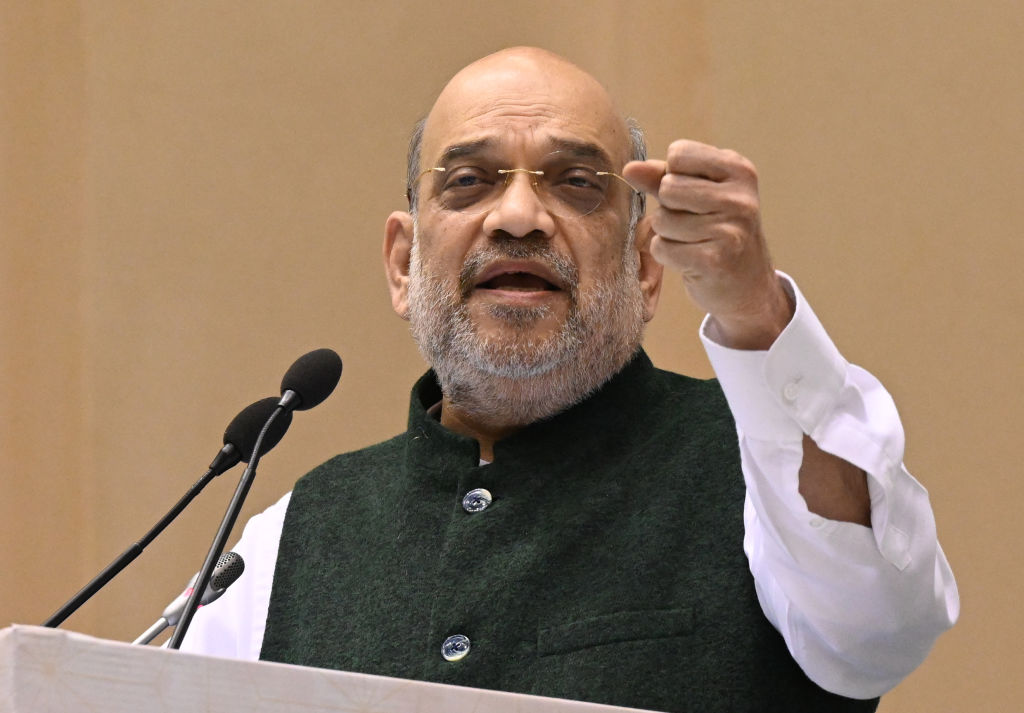
From a young age, he showed interest in social and political activities. His early exposure to nationalist ideology and grassroots activism shaped his long-term political direction. Gujarat later became the foundation of his rise in Indian politics.
Education
Amit Shah completed his schooling in Gujarat and later earned a Bachelor’s degree in Biochemistry from CU Shah Science College in Ahmedabad. While his academic background was in science, his interest gradually shifted toward public service and organizational work.
During his student years, he became associated with the Akhil Bharatiya Vidyarthi Parishad, the student wing of the Rashtriya Swayamsevak Sangh. This marked the beginning of his active political involvement.
Entry into Politics
Amit Shah formally joined the Bharatiya Janata Party in the 1980s. His political career began at the grassroots level, where he worked extensively in party organization and election management. His strategic skills quickly gained attention within the party.
One of the most important relationships in his political career has been with Narendra Modi. The two leaders worked closely in Gujarat politics, and their partnership significantly influenced Amit Shah’s growth within the BJP.
Rise in Gujarat Politics
Amit Shah was elected as a Member of the Gujarat Legislative Assembly from the Sarkhej constituency in 1997. He went on to win multiple elections from the same region, strengthening his political base.
During Narendra Modi’s tenure as Chief Minister of Gujarat, Amit Shah held several important ministerial portfolios in the state government, including Home, Law, Transport, and Excise. His role in managing internal security and administrative matters in Gujarat helped establish him as a powerful strategist.
He became known for his strong organizational control and election planning abilities. Many political observers credit him with designing successful election campaigns in Gujarat.
National Political Breakthrough
Amit Shah’s national political breakthrough came during the 2014 general elections. He was appointed as the BJP’s in-charge for Uttar Pradesh, India’s most politically crucial state. Under his leadership, the BJP won a historic number of seats in Uttar Pradesh, playing a decisive role in Narendra Modi’s rise to the Prime Minister’s office.
Following this success, Amit Shah was appointed as the National President of the Bharatiya Janata Party in 2014. As party president, he expanded the BJP’s influence across multiple Indian states. Under his leadership, the BJP formed governments in several regions where it previously had limited presence.
His leadership style focused on booth-level organization, data-driven campaigning, and cadre-based mobilization.
Role as Union Home Minister
In 2019, Amit Shah was appointed as India’s Union Home Minister after winning the Lok Sabha election from Gandhinagar. As Home Minister, he oversees internal security, border management, and law enforcement agencies.
One of the most significant developments during his tenure was the revocation of Article 370, which granted special status to Jammu and Kashmir. This move was presented by the government as a step toward national integration and administrative restructuring.
He has also been involved in implementing policies related to citizenship laws, national security reforms, and strengthening central investigative agencies.
Political Influence and Leadership Style
Amit Shah is widely regarded as one of the most influential political figures in contemporary India. His leadership style is often described as decisive, strategic, and organization-focused. He emphasizes discipline within party ranks and detailed planning in electoral campaigns.
His influence extends beyond governance into party-building strategy. Many analysts believe that his ability to convert organizational strength into electoral success has been a defining feature of his career.
Personal Life
Amit Shah is married to Sonal Shah, and the couple has a son, Jay Shah. Despite his demanding political schedule, he maintains close family ties. He is known for his interest in chess and cricket.
His personal lifestyle is generally described as disciplined and structured, reflecting his political personality.
Challenges and Controversies
Like many senior politicians, Amit Shah’s career has also seen legal and political controversies. Some cases in the past led to investigations and court proceedings. However, over time, he has continued to hold senior positions in government and party leadership.
Supporters view him as a strong administrator, while critics often debate his policies and methods. Regardless of perspective, his impact on Indian politics remains significant.
Electoral Strategy and Organizational Strength
One of the defining features of Amit Shah’s political journey has been his deep focus on organizational structure. Unlike many leaders who concentrate primarily on public speeches, Amit Shah built his reputation by strengthening the party at the booth level. He introduced systems that emphasized micro-management of constituencies, data collection, and volunteer coordination.
During his tenure as National President of the Bharatiya Janata Party, the party significantly expanded its membership base. Massive membership drives were launched across different states, increasing grassroots participation. Under his leadership, the BJP became one of the largest political parties in the world in terms of registered members.
His approach relied on constant communication with party workers, state leaders, and regional coordinators. This structure ensured that local concerns were integrated into national campaign strategies. Political observers often credit Amit Shah’s electoral management skills as one of the reasons behind the BJP’s consistent victories in multiple state and national elections after 2014.
Expansion Beyond Traditional Strongholds
Historically, the BJP had strong influence in northern and western India. However, during Amit Shah’s leadership phase, the party expanded into eastern and northeastern states. The BJP formed governments or alliances in states where it previously had limited presence.
This expansion was not accidental. It involved long-term planning, alliances with regional parties, and targeted campaigning. Amit Shah’s strategy focused on identifying local issues and projecting leadership that aligned with regional aspirations. His ability to adapt national messaging to local realities became a hallmark of his political style.
In states like West Bengal, Assam, Tripura, and parts of southern India, the BJP made noticeable gains during his presidency. This growth reshaped India’s political map and altered long-standing regional political equations.
Policy Initiatives as Home Minister
As Union Home Minister, Amit Shah has played a central role in shaping India’s internal security framework. The Ministry of Home Affairs oversees paramilitary forces, intelligence coordination, and national law enforcement agencies.
One of the most debated decisions during his tenure was the revocation of Article 370 in Jammu and Kashmir. The government described the move as an effort to integrate the region fully into the Indian Union and promote development. The decision significantly changed the administrative structure of the region by reorganizing it into Union Territories.
Apart from Jammu and Kashmir, he has focused on border security, counter-terrorism measures, and strengthening coordination among central agencies. Modernization of police forces and the use of technology in surveillance and crime tracking have also been emphasized during his tenure.
Parliamentary Presence and Legislative Role
Amit Shah is also known for his assertive presence in Parliament. As a senior cabinet minister, he has introduced and defended major bills related to national security and governance. His speeches often focus on national unity, constitutional authority, and long-term policy planning.
Supporters describe him as clear and firm in legislative debates. Critics often challenge the implications of certain policies, but there is broad agreement that his role in shaping national legislation has been significant in recent years.
Public Image and Leadership Perception
Amit Shah’s public image varies across political lines. Supporters see him as a master strategist who transformed party organization and strengthened governance. They credit him with building a disciplined political machine and ensuring electoral consistency.
Critics, on the other hand, argue that some policies under his leadership have been controversial and polarizing. Political debate surrounding his decisions has kept him constantly in national headlines.
Despite differing opinions, few deny his influence on contemporary Indian politics. Alongside Prime Minister Narendra Modi, he is considered one of the most powerful political figures in India.
Awards and Recognition
While Amit Shah is primarily known for his political achievements rather than awards, his influence is reflected in political rankings and public discussions. He has frequently appeared in lists highlighting powerful global leaders due to his position in the Indian government.
His recognition largely stems from his organizational ability and strategic vision rather than ceremonial honors.
Long-Term Political Impact
Amit Shah’s long-term political impact will likely be measured by two key factors: the structural expansion of the BJP and the policy changes implemented during his tenure as Home Minister. He helped transform the BJP from a strong national party into a dominant political force with deep organizational roots across India.
His career reflects a shift in Indian politics toward centralized campaign management, digital outreach, and structured party growth. The systems he introduced may continue to influence election strategies in India for years to come.
Amit Shah’s journey from a young political activist in Gujarat to one of India’s most influential leaders is a story of strategic planning, persistence, and organizational discipline. His role in expanding the Bharatiya Janata Party, managing major national campaigns, and shaping internal security policy has made him a central figure in modern Indian governance.
Whether viewed as a powerful strategist or a controversial policymaker, Amit Shah’s influence on India’s political landscape remains undeniable.
Legacy and Impact
Amit Shah’s political journey reflects the transformation of the Bharatiya Janata Party from a regional force to a dominant national party. His work in strengthening party structure, expanding electoral reach, and influencing policy decisions has left a lasting mark on Indian politics.
He is considered one of the key architects behind the BJP’s modern electoral success. His partnership with Prime Minister Narendra Modi continues to shape the direction of India’s governance.
Frequently Asked Questions (FAQ)
Who is Amit Shah?
Amit Shah is an Indian politician and the current Union Home Minister of India. He is a senior leader of the Bharatiya Janata Party.
When was Amit Shah born?
He was born on October 22, 1964.
What is Amit Shah’s role in the BJP?
He served as the National President of the BJP from 2014 to 2020 and played a major role in expanding the party’s influence across India.
What is Amit Shah known for?
He is known for his election strategies, organizational leadership, and his role in revoking Article 370 in Jammu and Kashmir.
Is Amit Shah close to Narendra Modi?
Yes, Amit Shah is considered one of Narendra Modi’s closest political associates and long-time collaborators.
This biography is part of Loaded Culture’s exploration of global figures shaping identity, leadership, and cultural evolution. Discover more profiles in our Biography category or explore broader cultural analysis on the LoadedCulture homepage, where history, influence, and modern culture connect.
