

Ahilyabai Holkar stands as one of the most respected and progressive female rulers in Indian history. As the Queen of the Malwa kingdom in the 18th century, she governed with a rare combination of administrative discipline, moral authority, and social responsibility. At a time when women were largely excluded from political power, Ahilyabai ruled effectively for nearly three decades, earning admiration across regions, religions, and social classes.
She is remembered not for conquest or spectacle, but for reform, justice, and public welfare. Her reign challenged prevailing assumptions about leadership, gender, and power, demonstrating that ethical governance could coexist with strength and stability. Today, Ahilyabai Holkar is widely regarded as a model ruler whose legacy continues to shape conversations about leadership, cultural identity, and historical memory in South Asia and beyond.
This Ahilyabai Holkar biography explores her life, rise to power, reforms, and why her historical impact remains deeply relevant.
Early Life and Background
Ahilyabai Holkar was born in 1725 in the village of Chondi, located in present-day Maharashtra, India. She came from a modest background, the daughter of a village headman. Unlike royal children groomed for leadership, Ahilyabai’s early life was rooted in rural realities, community responsibility, and religious discipline.
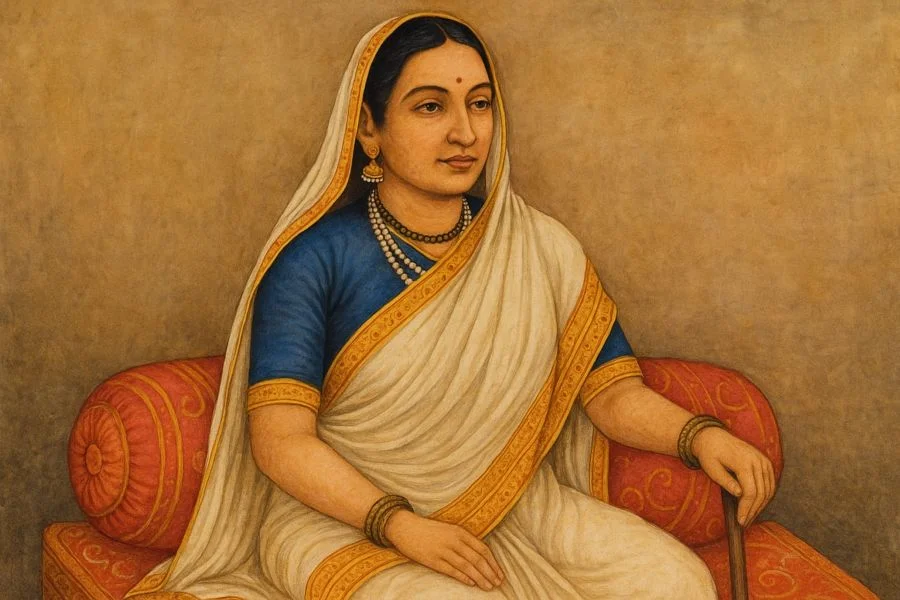
Her intelligence and character were noticed early. According to historical accounts, Malhar Rao Holkar, a powerful military leader and noble of the Maratha Empire, encountered Ahilyabai while visiting her village and was impressed by her composure and wisdom. This encounter led to her marriage to his son, Khanderao Holkar.
Her education included reading, religious study, and exposure to governance through court life. These formative experiences shaped her worldview, blending humility with administrative awareness and spiritual grounding.
Tragedy and Path to Power
Ahilyabai’s life was marked by personal loss. Her husband, Khanderao Holkar, died in battle in 1754. Later, her father-in-law Malhar Rao Holkar passed away in 1766. These events could have ended her public life, as was common for widowed women at the time.
Instead, Ahilyabai emerged as a leader.
Following Malhar Rao’s death, the kingdom faced political uncertainty. Despite resistance from traditional elites, Ahilyabai was appointed ruler of the Holkar state. Her accession was not symbolic. She took direct responsibility for administration, justice, military oversight, and public welfare.
Her rise to power was unprecedented and challenged deeply entrenched gender norms within Indian and regional politics.
Governance and Administrative Reforms
Ahilyabai Holkar’s reign is widely regarded as a golden era of governance. She ruled from Maheshwar, transforming it into a center of culture, trade, and administration.
Her approach to governance emphasized fairness, accessibility, and accountability. She held open court, listened to grievances personally, and ensured that justice was administered without bias. Corruption was discouraged, and officials were held to high ethical standards.
Economically, she supported agriculture, trade, and infrastructure development. Roads, wells, rest houses, and marketplaces were built to support both urban and rural populations. Her policies strengthened economic stability while reducing social hardship.
Rather than expanding territory through war, Ahilyabai focused on internal consolidation and prosperity.
Religious Tolerance and Cultural Patronage
One of Ahilyabai Holkar’s most enduring contributions was her patronage of religious and cultural institutions. She commissioned and restored temples, ghats, and pilgrimage sites across India, including in Varanasi, Somnath, Dwarka, and Rameswaram.
Importantly, her support was not limited to one region or sect. She promoted religious tolerance and respected diverse traditions, reinforcing social harmony in a deeply plural society.
Her architectural projects were not acts of vanity but public service. These structures provided employment, encouraged pilgrimage-based economies, and strengthened cultural continuity. Many of these sites remain central to Indian cultural life today.
Leadership Style and Moral Authority
Ahilyabai Holkar’s leadership style combined discipline with compassion. She lived simply, avoided extravagance, and held herself to the same standards she expected of others. This moral authority reinforced her legitimacy as a ruler.
She rejected personal glorification and focused on duty. Her correspondence and recorded decisions reveal a leader deeply concerned with ethical governance, social justice, and long-term stability.
In an era dominated by militarized power, her rule demonstrated that legitimacy could be built through trust, fairness, and service.
Historical Impact and Legacy
Ahilyabai Holkar’s legacy extends far beyond her lifetime. Historians regard her as one of India’s greatest rulers, often compared favorably with far more powerful monarchs. Her reign challenged assumptions about women’s roles in leadership and governance.
In modern India, she is remembered as a symbol of principled leadership, administrative excellence, and cultural stewardship. Statues, institutions, and public commemorations continue to honor her contributions.
Globally, her story resonates with discussions about ethical leadership, gender equity, and governance rooted in service rather than dominance.
Why Ahilyabai Holkar Matters Today
Ahilyabai Holkar matters today because her life offers an alternative model of power. In a world often defined by authoritarianism or spectacle-driven leadership, her example emphasizes responsibility, humility, and reform.
Her biography speaks to readers interested in history, identity, and leadership across cultures. She represents the enduring truth that influence does not require force, and that governance grounded in ethics can leave a lasting impact.
Frequently Asked Questions (FAQs)
Who was Ahilyabai Holkar?
Ahilyabai Holkar was an 18th-century Indian queen and ruler of the Holkar dynasty, known for her just governance and reforms.
What is Ahilyabai Holkar known for?
She is known for administrative excellence, religious tolerance, public welfare projects, and ethical leadership.
Why is Ahilyabai Holkar historically important?
She demonstrated effective female leadership in a patriarchal era and left a lasting legacy of reform and cultural preservation.
Where did Ahilyabai Holkar rule from?
She ruled the Malwa kingdom from Maheshwar, which became a major cultural and administrative center.
How is Ahilyabai Holkar remembered today?
She is remembered as one of India’s greatest rulers and a symbol of justice, service, and moral authority.
Ahilyabai Holkar’s life stands as a testament to the power of principled leadership. Her reign redefined governance in her era and continues to inspire discussions about justice, reform, and ethical authority. In documenting her story, we are reminded that history’s most enduring leaders are often those who rule not through fear or conquest, but through service and integrity.
