

Akhilesh Yadav is an Indian politician best known for serving as the youngest Chief Minister of Uttar Pradesh, India’s most populous state. A key leader of the Samajwadi Party (SP), he represents a new generation of regional political leadership that blends traditional party structures with modern campaign strategies.
From his early education abroad to leading one of India’s most politically significant states, Akhilesh Yadav’s journey reflects the evolving dynamics of Indian democracy, youth leadership, and regional power politics.
Early Life and Education
Akhilesh Yadav was born on July 1, 1973, in Saifai village, Etawah district, Uttar Pradesh, India. He is the son of Mulayam Singh Yadav, a veteran politician and founder of the Samajwadi Party. Growing up in a politically active family exposed him early to public life and grassroots mobilization.
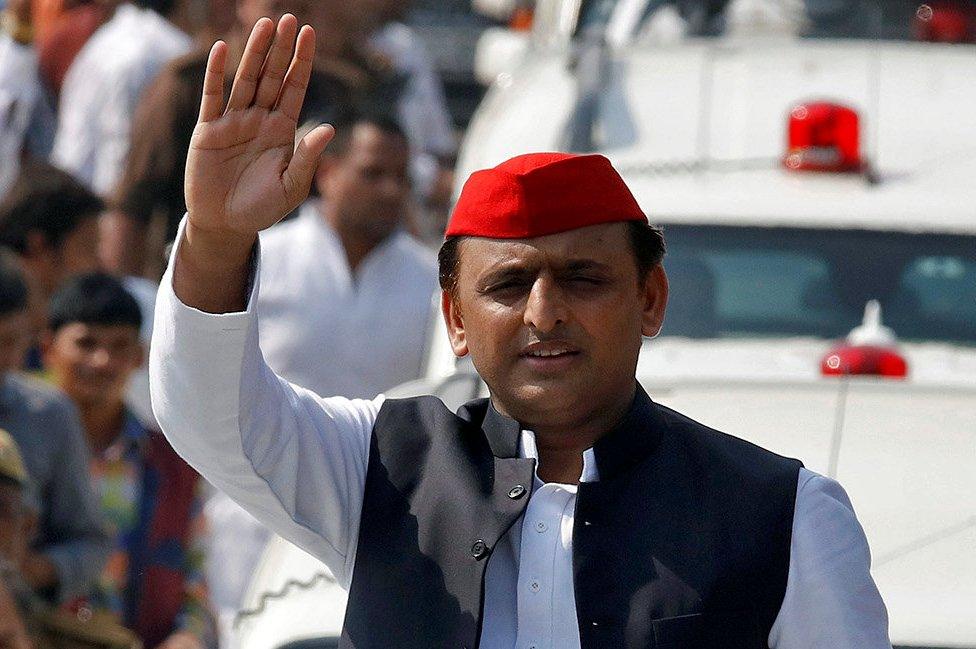
Despite his political lineage, Akhilesh’s education took him beyond India. He completed his schooling at the Dholpur Military School in Rajasthan. He later earned a degree in civil environmental engineering from Sri Jayachamarajendra College of Engineering in Mysuru, Karnataka. He then pursued a master’s degree in environmental engineering from the University of Sydney, Australia.
His academic background, particularly in environmental engineering, distinguished him from many regional political leaders and contributed to his image as a modern, educated politician.
Entry into Politics
Akhilesh Yadav formally entered politics in 2000, contesting and winning a by-election to the Lok Sabha, India’s lower house of Parliament, from Kannauj. He went on to represent the constituency multiple times, building a reputation as a young and articulate parliamentarian.
During his early years in national politics, he maintained a relatively low profile compared to his father. However, within party circles, he was gradually seen as a potential successor capable of modernizing the Samajwadi Party’s image.
Rise to Chief Minister of Uttar Pradesh
In 2012, Akhilesh Yadav led the Samajwadi Party’s campaign in the Uttar Pradesh Legislative Assembly elections. The campaign focused heavily on youth outreach, development promises, and social welfare schemes. His use of social media and technology-driven messaging marked a shift from traditional campaign methods used by many regional parties.
The Samajwadi Party secured a clear majority in the elections, and at the age of 38, Akhilesh Yadav became the youngest Chief Minister of Uttar Pradesh.
His tenure from 2012 to 2017 focused on infrastructure development and welfare programs. Major initiatives during his time included:
-
The Lucknow Metro project
-
Agra-Lucknow Expressway
-
Laptop distribution schemes for students
-
Expansion of road networks
-
Urban modernization projects
Supporters praised these efforts as signs of a development-oriented leadership style. Critics, however, argued that law and order issues and internal party conflicts weakened his administration.
Leadership of the Samajwadi Party
A significant turning point in Akhilesh Yadav’s political career came in 2016–2017 when internal disputes emerged within the Samajwadi Party, particularly between him and his father, Mulayam Singh Yadav, along with other senior party leaders.
The conflict eventually resulted in Akhilesh taking control of the party organization ahead of the 2017 state elections. This leadership shift symbolized a generational transition within the party.
Although the Samajwadi Party lost the 2017 Uttar Pradesh elections to the Bharatiya Janata Party (BJP), Akhilesh consolidated his position as the primary face of the party moving forward.
Political Strategy and Ideology
Akhilesh Yadav positions himself as a leader focused on social justice, secularism, and development. The Samajwadi Party traditionally draws support from specific caste groups and minority communities in Uttar Pradesh. Under Akhilesh’s leadership, efforts were made to broaden the party’s appeal among urban youth and middle-class voters.
He has frequently criticized central government policies on economic issues, unemployment, and federal relations. At the same time, he has attempted to rebrand the party as development-focused rather than purely identity-driven.
In recent elections, he has formed alliances with other regional and national parties in efforts to consolidate opposition votes in Uttar Pradesh.
Personal Life
Akhilesh Yadav is married to Dimple Yadav, who is also a politician and Member of Parliament. The couple has three children. Dimple Yadav has played an active role in the Samajwadi Party and has represented constituencies in Uttar Pradesh.
Despite intense political competition in the state, Akhilesh is often described as soft-spoken and measured in public appearances. He maintains an interest in sports, cycling, and technology, which has helped reinforce his image as a modern political leader.
His personal background, combining rural roots with international education, contributes to his dual appeal among traditional and aspirational voters.
Generational Shift in Uttar Pradesh Politics
One of the defining aspects of Akhilesh Yadav’s rise was the generational transition within the Samajwadi Party. Founded in 1992 by Mulayam Singh Yadav, the party traditionally relied on grassroots mobilization, caste-based coalitions, and strong regional networks. Akhilesh’s leadership marked a shift toward a more development-focused and technology-driven political strategy.
When he became Chief Minister in 2012, he symbolized a break from the image of old-guard politics. His campaign emphasized infrastructure, education, and modernization. By distributing laptops to students and promoting expressway projects, he attempted to connect with young voters who were increasingly influenced by aspirations around employment, digital access, and urban growth.
This generational contrast became even more visible during the internal party conflict in 2016. The struggle for leadership was widely interpreted as a battle between traditional power structures and a new political approach centered on branding, governance reforms, and media outreach.
Governance Style and Policy Focus
During his tenure as Chief Minister, Akhilesh Yadav positioned himself as a development-oriented leader. The Agra-Lucknow Expressway, one of India’s longest expressways at the time of completion, became a flagship project symbolizing connectivity and economic growth. The Lucknow Metro project also signaled efforts to modernize urban infrastructure.
His government also expanded ambulance services and introduced welfare programs targeting rural communities. While these projects earned praise for improving infrastructure visibility in the state, critics pointed to persistent challenges in law enforcement and administrative efficiency.
Supporters argue that many of his initiatives laid groundwork for long-term economic growth in Uttar Pradesh, which has historically faced development gaps compared to other Indian states.
Role in National Opposition Politics
Beyond state politics, Akhilesh Yadav plays a strategic role in India’s opposition landscape. Uttar Pradesh sends the largest number of representatives to the national Parliament, making its political dynamics crucial for national electoral outcomes.
In recent years, he has sought alliances with other regional parties to counterbalance the dominance of the Bharatiya Janata Party. Coalition-building has become a central strategy in his political approach. His willingness to partner with former rivals reflects a pragmatic adaptation to evolving electoral realities.
This coalition-oriented strategy indicates his understanding that regional parties must collaborate to maintain national relevance.
Public Image and Media Strategy
Akhilesh Yadav has cultivated an image of accessibility and relatability. Unlike many senior politicians, he frequently uses social media platforms to engage with supporters and respond to policy debates. His communication style tends to be measured rather than confrontational, which differentiates him from more aggressive political rhetoric seen in Indian politics.
His interest in technology, cycling events, and youth programs reinforces his branding as a modern leader. Campaign visuals often feature development imagery rather than purely ideological messaging.
At the same time, political opponents argue that branding alone cannot substitute structural reform. The contrast between perception and measurable governance outcomes remains part of ongoing political debate.
Electoral Challenges and Future Prospects
The 2022 Uttar Pradesh Assembly elections were a major test of Akhilesh Yadav’s leadership. Although the Samajwadi Party significantly improved its seat count compared to 2017, it fell short of forming a government. However, the gains demonstrated that he remains a formidable political figure capable of mobilizing substantial voter support.
Looking ahead, his political future depends on several factors:
-
Expanding the party’s social coalition beyond traditional voter bases
-
Strengthening grassroots organization
-
Refining economic messaging
-
Navigating alliances effectively
Given Uttar Pradesh’s central role in Indian politics, Akhilesh Yadav is likely to remain a key opposition voice in the coming years.
Political Legacy in Formation
Unlike historical figures whose legacies are defined after retirement, Akhilesh Yadav’s political legacy is still evolving. As a relatively young leader by national standards, he has time to reshape both his party and his broader political positioning.
He represents a hybrid model of leadership: rooted in regional identity politics but increasingly aware of development narratives and urban aspirations. His career reflects larger changes within Indian democracy, where youth engagement, digital outreach, and coalition politics are becoming more influential.
Whether he returns to executive office or continues as a long-term opposition leader, his impact on Uttar Pradesh politics is already significant.
Electoral Performance and Recent Developments
In the 2019 Indian general elections, Akhilesh Yadav contested from Azamgarh and won a seat in the Lok Sabha. In the 2022 Uttar Pradesh Assembly elections, he led the Samajwadi Party in a high-stakes contest against the ruling BJP. Although the party increased its seat tally significantly compared to the previous election, it did not secure a majority.
Even in defeat, the improved performance strengthened his standing as a key opposition figure in one of India’s most politically crucial states.
Political Significance
Uttar Pradesh plays a decisive role in Indian national politics due to its large population and substantial representation in Parliament. As a result, the Chief Minister and major party leaders from the state often hold national influence.
Akhilesh Yadav’s leadership is therefore significant not only regionally but also within the broader national political landscape. His ability to navigate coalition politics, generational change within his party, and evolving voter expectations will likely shape his future role in Indian politics.
Frequently Asked Questions (FAQ)
Who is Akhilesh Yadav?
Akhilesh Yadav is an Indian politician and leader of the Samajwadi Party. He served as the Chief Minister of Uttar Pradesh from 2012 to 2017.
When was Akhilesh Yadav born?
He was born on July 1, 1973, in Saifai, Uttar Pradesh, India.
What is Akhilesh Yadav known for?
He is known for becoming the youngest Chief Minister of Uttar Pradesh and for leading development projects such as the Agra-Lucknow Expressway and the Lucknow Metro.
What is his educational background?
Akhilesh Yadav studied environmental engineering in India and earned a master’s degree from the University of Sydney in Australia.
Who is Akhilesh Yadav’s wife?
He is married to Dimple Yadav, who is also a politician and Member of Parliament.
