

Ajay Pal Lamba is an Indian Police Service (IPS) officer known for his disciplined leadership, investigative rigor, and commitment to public service. Over the course of his career, he has served in multiple capacities within India’s law enforcement framework, gaining recognition for handling complex criminal investigations and maintaining law and order in challenging environments.
His professional journey reflects the demanding nature of policing in India, where officers must combine administrative competence, operational readiness, and ethical responsibility.
Early Life and Education
Ajay Pal Lamba was born and raised in India in a family that valued education and public responsibility. From a young age, he demonstrated strong academic focus and a keen interest in governance and justice. Inspired by the structure and impact of civil services, he chose to pursue a career that would place him at the forefront of maintaining public order.
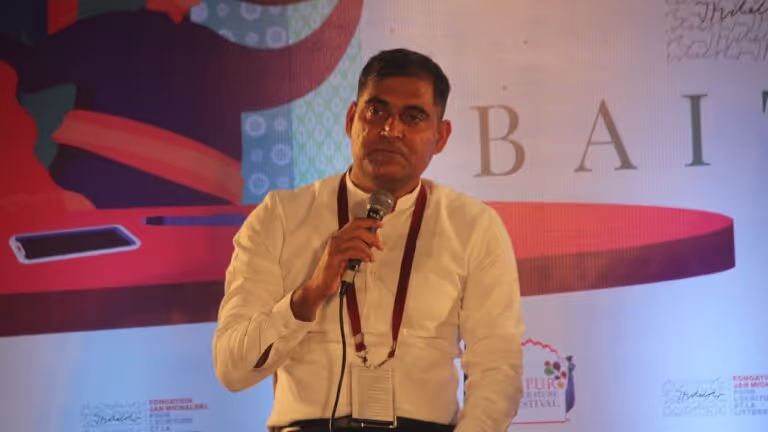
He completed his higher education before preparing for the highly competitive Civil Services Examination conducted by the Union Public Service Commission. Clearing this examination is one of the most challenging academic and professional achievements in India, requiring in-depth preparation across subjects such as law, public administration, ethics, and current affairs.
After successfully qualifying, he was inducted into the prestigious Indian Police Service.
Ajay Pal Lamba is an Indian Police Service (IPS) officer from the Rajasthan cadre, best known for leading the investigation that resulted in the conviction of self-styled godman Asaram Bapu. A 2005-batch officer, Lamba has held key posts in the Rajasthan Police, earning recognition for his professionalism and integrity.
Key facts
-
Full name: Ajay Pal Lamba
-
Born: August 7, 1978, Sikar, Rajasthan
-
Service: Indian Police Service (Rajasthan cadre, 2005 batch)
-
Notable role: Led the 2013 Asaram rape case investigation
-
Book: Gunning for the Godman (2020)
Career and background
Lamba graduated in electronics and telecommunication engineering before joining the IPS. Over his career, he has served as superintendent of police in multiple Rajasthan districts, including Jaipur, Pali, Jhunjhunu, Alwar, and Udaipur, and later in the CID-Crime Branch and Anti-Corruption Bureau (ACB). Known for his firm but methodical policing style, he is often cited among Rajasthan’s assertive law-enforcement officers.
Role in the Asaram case
As deputy commissioner of police (West), Jodhpur, in 2013, Lamba headed the high-profile investigation into Asaram’s sexual assault of a minor girl at his Jodhpur ashram. Despite intense public and political scrutiny, threats, and witness intimidation, his team secured arrest warrants, coordinated Asaram’s apprehension from Indore, and produced a strong chargesheet within ten weeks. The case culminated in Asaram’s life imprisonment in 2018, marking a landmark conviction under the POCSO Act.
Publications and public recognition
In 2020, Lamba published Gunning for the Godman, a first-hand account of the Asaram investigation, detailing challenges faced by the police under pressure. The book received wide media coverage for its transparency about investigative work and law-enforcement ethics.
Current role
As of recent reports, Lamba serves in the Rajasthan Anti-Corruption Bureau, Jodhpur, where he continues to focus on integrity and accountability within the police and public administration.
Training and Early Career
Like all IPS officers, Ajay Pal Lamba underwent rigorous training at the Sardar Vallabhbhai Patel National Police Academy in Hyderabad. The academy provides comprehensive instruction in criminal law, forensic science, field tactics, weapons training, physical conditioning, and leadership development.
Following training, he was assigned to his state cadre and began his career as an Assistant Superintendent of Police. These early postings allowed him to gain practical exposure to grassroots policing, including crime investigation, intelligence coordination, and crowd management.
His formative years in service helped shape his reputation as a meticulous and disciplined officer.
Law Enforcement Career
Throughout his career, Ajay Pal Lamba has handled a range of responsibilities central to district and state-level policing. These include:
-
Supervising major criminal investigations
-
Coordinating intelligence operations
-
Managing law-and-order situations
-
Overseeing personnel administration
-
Strengthening community policing initiatives
As he progressed to senior ranks, his role expanded to include oversight of multiple police stations and specialized units. Leadership at this level requires strategic planning, resource allocation, and coordination with civil administration, judiciary, and other government agencies.
His tenure in various postings has often involved addressing sensitive cases that require both investigative precision and public communication.
Approach to Policing
Ajay Pal Lamba is known for a professional approach grounded in procedure and accountability. Effective policing demands balancing enforcement with community engagement. Officers must ensure that legal frameworks are upheld while maintaining public trust.
His approach emphasizes:
-
Evidence-based investigations
-
Transparent administrative processes
-
Timely response to public grievances
-
Ethical conduct within the force
By reinforcing discipline and procedural integrity, he contributes to strengthening institutional credibility.
Public Service and Administrative Leadership
Beyond crime control, IPS officers play an essential role in broader public administration. Ajay Pal Lamba’s service has likely included collaboration during elections, disaster response coordination, and public safety planning during large-scale events.
Senior officers are often responsible for crisis management, where swift decision-making can prevent escalation of conflict. Leadership in such contexts requires calm judgment, clear communication, and careful assessment of risks.
His administrative roles highlight the multi-dimensional nature of policing, where law enforcement intersects with governance and community welfare.
Challenges in Modern Policing
Contemporary law enforcement in India involves navigating complex challenges, including cybercrime, organized criminal networks, public protests, and evolving security threats. Officers must also manage media scrutiny and public accountability.
Ajay Pal Lamba’s career reflects the broader transformation of Indian policing, including increased use of technology, digitized crime tracking systems, and inter-agency coordination.
Maintaining neutrality and adherence to constitutional principles remains central to effective policing. Officers like Lamba contribute to institutional stability by prioritizing professionalism over external pressures.
Reputation and Professional Impact
Within administrative and policing circles, Ajay Pal Lamba is regarded as a disciplined and capable officer. Recognition in policing often comes not through public visibility but through consistent performance, effective case resolution, and orderly district management.
His professional journey represents the dedication required to sustain a long-term career in public service. By upholding law, maintaining order, and ensuring procedural fairness, he contributes to strengthening the rule of law.
Legacy and Continuing Service
While still active in service, Ajay Pal Lamba’s career serves as an example of structured leadership within India’s civil services. His contributions underscore the importance of ethical governance and institutional discipline.
As law enforcement continues to evolve with technological advancements and changing societal expectations, officers like him remain central to shaping a responsive and accountable policing system.
Ajay Pal Lamba’s professional journey also reflects the changing landscape of modern policing in India. Over the years, law enforcement has evolved from traditional crime control methods to more technology-driven and intelligence-based approaches. Officers like Ajay Pal Lamba have been part of this transition, adapting to new systems such as digital crime tracking, forensic advancements, and data-led investigation models. His career demonstrates how senior officers must not only manage field operations but also understand policy, governance, and technological integration within the police force.
One of the most important aspects of his service has been crisis management. Senior police officials are often called upon to respond to emergencies that require calm decision-making and coordinated action. Whether dealing with large-scale public gatherings, law-and-order disturbances, or high-pressure investigations, Ajay Pal Lamba’s leadership has been shaped by the responsibility of ensuring both public safety and legal compliance. Such roles demand a deep understanding of constitutional rights while maintaining firm control over volatile situations.
Another notable dimension of his career is administrative reform within the police system. Senior IPS officers frequently oversee reforms related to training, discipline, and modernization. Ajay Pal Lamba has been associated with efforts to strengthen institutional efficiency, improve accountability, and promote professionalism among personnel. Police modernization programs, which include better equipment, communication systems, and training modules, are crucial in a rapidly developing country. His involvement in these initiatives highlights his broader vision beyond routine policing.
Public trust is a cornerstone of effective law enforcement. Throughout his career, Ajay Pal Lamba has emphasized the importance of building positive relationships between the police and the community. Community policing initiatives, public awareness campaigns, and citizen outreach programs help bridge the gap between authorities and the public. By encouraging dialogue and cooperation, such initiatives contribute to crime prevention and social harmony.
In addition to field assignments, senior IPS officers are often entrusted with sensitive investigations that require discretion and integrity. Ajay Pal Lamba’s reputation has been shaped by his ability to handle complex cases with professionalism. Investigative work at high levels involves coordination with multiple agencies, careful documentation, and strict adherence to legal procedures. His experience in these areas has reinforced his standing within law enforcement circles.
Mentorship is another important contribution of experienced officers. Younger police officers and trainees benefit from the guidance of senior officials who have navigated diverse challenges. Ajay Pal Lamba’s career serves as a reference point for aspiring civil servants preparing for the UPSC examinations. His journey demonstrates that success in the civil services requires discipline, continuous learning, and a strong ethical foundation.
Beyond his official duties, his personal life reflects the balance many public servants must maintain. The demanding nature of policing often means long hours, frequent transfers, and high levels of stress. Maintaining family relationships and personal well-being alongside such responsibilities requires resilience and support. Ajay Pal Lamba’s life story illustrates the human side of public service, reminding readers that behind every uniform is an individual dedicated to serving society.
His legacy is closely linked to the broader narrative of India’s internal security framework. Officers in senior positions contribute to shaping policy directions, strengthening coordination between agencies, and enhancing national security mechanisms. Ajay Pal Lamba’s career aligns with the values promoted by senior national security leaders such as Ajit Doval, who emphasize strategic foresight and institutional integrity in safeguarding the nation.
Over the years, public interest in biographies of civil servants has grown. Readers seek to understand how individuals rise through competitive systems like the UPSC and navigate the responsibilities of public office. Ajay Pal Lamba’s biography provides insight into dedication, leadership, and commitment to duty. His journey underscores that effective policing is not only about enforcement but also about service, reform, and ethical responsibility.
In conclusion, Ajay Pal Lamba’s life and career reflect the ideals of discipline, accountability, and public service that define the Indian Police Service. From field operations to administrative leadership, his contributions illustrate the multifaceted nature of law enforcement. His story continues to inspire those who aspire to serve the nation with integrity and professionalism.
Frequently Asked Questions (FAQ)
Who is Ajay Pal Lamba?
Ajay Pal Lamba is an Indian Police Service officer known for his work in law enforcement and public administration.
How did Ajay Pal Lamba become an IPS officer?
He cleared the Civil Services Examination conducted by the Union Public Service Commission and completed training at the National Police Academy.
What are his main responsibilities?
His responsibilities include supervising investigations, maintaining law and order, managing district police operations, and supporting public safety initiatives.
Why is his career significant?
His career reflects disciplined public service and leadership within India’s law enforcement system.
