

Ajahn Chah was a highly respected Thai Buddhist monk and meditation master whose teachings influenced modern Theravada Buddhism around the world. Known for his simple language, deep wisdom, and emphasis on direct experience, Ajahn Chah helped make traditional forest monastic practice accessible to both Thai and Western students.
His teachings focused on mindfulness, detachment, discipline, and understanding the nature of suffering. Through the monasteries he founded and the disciples he trained, Ajahn Chah became one of the most influential Buddhist teachers of the 20th century.
Early Life and Background
Ajahn Chah was born as Chah Subhaddo on June 17, 1918, in Ubon Ratchathani province in northeastern Thailand. He grew up in a rural farming family, experiencing a simple village lifestyle that later influenced his preference for forest monasticism.
As a child, he showed an interest in religion and entered a local monastery as a novice monk. However, like many young novices at the time, he later returned to lay life to help support his family. In his early twenties, after witnessing suffering and death within his community, he felt a renewed and deeper spiritual calling.
In 1939, at the age of 21, he was ordained as a bhikkhu (fully ordained monk) in the Theravada Buddhist tradition.
Spiritual Quest and Forest Tradition
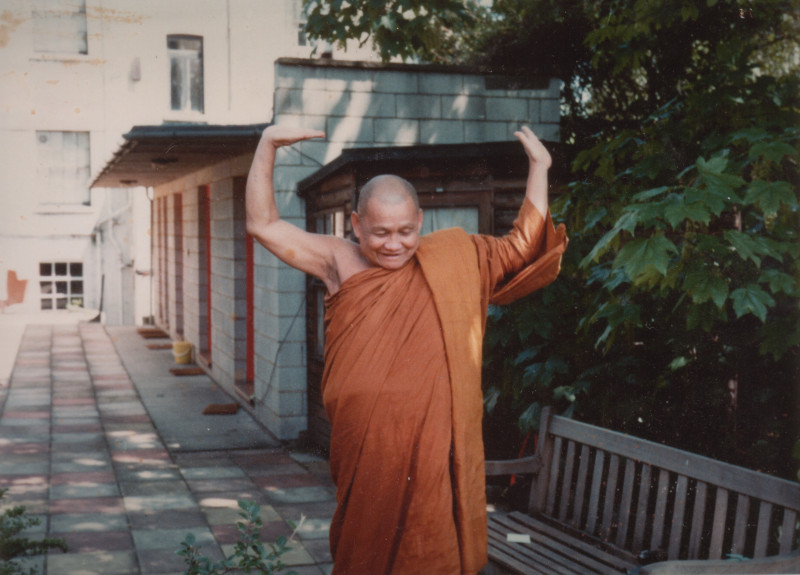
After ordination, Ajahn Chah sought deeper understanding beyond formal temple education. He traveled extensively throughout Thailand, living in forests, cremation grounds, and remote monasteries. This wandering period exposed him to strict ascetic practices and intensive meditation training.
He eventually became associated with the Thai Forest Tradition, a movement within Theravada Buddhism emphasizing:
-
Meditation practice over academic study
-
Strict adherence to monastic discipline (Vinaya)
-
Simple living in natural surroundings
-
Direct realization of Buddhist teachings
The forest tradition stresses personal experience and insight into impermanence (anicca), suffering (dukkha), and non-self (anatta). Ajahn Chah embraced these principles wholeheartedly.
Founding Wat Nong Pah Pong
In 1954, Ajahn Chah established Wat Nong Pah Pong, a forest monastery in Ubon Ratchathani. Starting with just a few disciples and simple huts, the monastery gradually grew into a major center for meditation practice.
Wat Nong Pah Pong became known for its disciplined yet balanced approach to monastic life. Ajahn Chah required monks to follow strict rules while maintaining humility and mindfulness in daily tasks. Sweeping leaves, washing bowls, and sitting in meditation were treated as equally important aspects of practice.
Under his guidance, the monastery attracted hundreds of monks and lay practitioners.
Teaching Style and Philosophy
Ajahn Chah was renowned for his clear, practical teaching style. Rather than using complex philosophical language, he relied on everyday examples and humor to communicate profound truths.
Some key aspects of his teaching include:
-
Letting go: He often emphasized that suffering arises from attachment and that peace comes from releasing clinging.
-
Mindfulness in daily life: Meditation was not limited to formal sitting; awareness should extend to all activities.
-
Acceptance of impermanence: Everything changes, and understanding this truth reduces anxiety and fear.
-
Discipline as freedom: Strict monastic discipline was seen not as restriction, but as a path to inner liberation.
One of his well-known teachings compares the mind to a still forest pool. When the water is calm, it reflects clearly. Similarly, a calm mind sees reality as it is.
Influence on Western Buddhism
Ajahn Chah played a major role in introducing the Thai Forest Tradition to Western practitioners. In the 1960s and 1970s, several Western seekers traveled to Thailand in search of authentic meditation training.
Among his most prominent Western disciples were:
-
Ajahn Sumedho, who later founded monasteries in the United Kingdom
-
Ajahn Amaro
-
Ajahn Brahm
To accommodate Western monks, Ajahn Chah established Wat Pah Nanachat (International Forest Monastery) in 1975. This monastery provided training in English while maintaining traditional discipline.
Through these efforts, his teachings spread to Europe, North America, Australia, and beyond. Today, monasteries in the Thai Forest lineage exist worldwide.
Later Years and Illness
In the early 1980s, Ajahn Chah suffered a severe stroke that left him partially paralyzed and unable to speak clearly. Despite his illness, his presence continued to inspire disciples.
For nearly a decade, he remained under medical care while monks and devotees supported him. Even without active teaching, his life embodied the practice of patience, acceptance, and equanimity.
Ajahn Chah passed away on January 16, 1992. His funeral in Thailand was attended by thousands of monks and lay followers, reflecting the deep respect he commanded.
Core Teachings on Suffering and Liberation
At the heart of Ajahn Chah’s teachings was a direct engagement with the Buddha’s Four Noble Truths, particularly the understanding of suffering (dukkha). He taught that suffering does not arise merely from external events but from the mind’s attachment to experiences. Whether pleasure or pain, attachment creates instability because all conditions are impermanent.
Ajahn Chah frequently reminded students that peace cannot be found by controlling the world. Instead, it comes from observing the mind and understanding its habits. He encouraged practitioners to watch thoughts and emotions without identifying with them. This simple yet profound method allowed students to experience the truth of impermanence directly rather than merely intellectually.
He often used everyday metaphors to make complex teachings accessible. For example, he compared attachment to holding a burning coal. If you hold it tightly, you suffer. If you let it go, relief follows immediately. In this way, his teachings emphasized experiential wisdom rather than abstract philosophy.
The Balance Between Effort and Letting Go
Ajahn Chah stressed the importance of balanced effort in spiritual practice. Too much striving could create tension, while too little effort could lead to laziness. He described the path as similar to tuning a musical instrument. If the strings are too tight, they snap. If too loose, they do not produce sound.
This middle way approach reflected core Buddhist principles while also addressing the psychological tendencies of modern practitioners. Many Western students, accustomed to goal-oriented cultures, struggled with the idea of “non-striving.” Ajahn Chah skillfully guided them toward understanding that meditation is not about achieving something new, but about recognizing what is already present.
Emphasis on Community and Monastic Harmony
Ajahn Chah placed strong emphasis on communal harmony within the monastic sangha. He believed that living in community revealed one’s attachments more clearly than living alone. Interpersonal challenges, he taught, were opportunities for self-reflection.
Monks under his guidance were encouraged to practice patience, forgiveness, and humility. Disagreements were addressed with mindfulness rather than blame. Through this communal framework, Ajahn Chah demonstrated that spiritual growth is not separate from daily interaction with others.
The monastic communities he established continue to operate with a focus on shared responsibility and collective discipline. This organizational structure has helped sustain his lineage long after his passing.
Influence on Lay Practitioners
Although deeply rooted in monastic discipline, Ajahn Chah’s teachings were not limited to monks. Lay followers found his guidance practical and applicable to everyday life. He frequently taught that spiritual practice does not require retreating from society; instead, mindfulness can be cultivated while working, raising families, and fulfilling responsibilities.
Many lay practitioners were drawn to his emphasis on simplicity. In a rapidly modernizing Thailand, and later in Western societies, Ajahn Chah’s message offered a counterbalance to materialism. He reminded followers that true contentment arises from inner clarity rather than external accumulation.
Global Spiritual Relevance
Today, Ajahn Chah’s influence extends far beyond Thailand. Monasteries inspired by his teachings operate in the United Kingdom, United States, Australia, Europe, and other regions. His talks have been translated into numerous languages, making his wisdom accessible to a global audience.
In an era marked by stress, technological distraction, and constant change, his teachings on stillness and impermanence remain highly relevant. Modern mindfulness movements, though often secularized, echo principles long emphasized in the Thai Forest Tradition.
Ajahn Chah’s legacy lies not only in institutions but in a method of practice that encourages direct observation of reality. His life demonstrated that profound spiritual understanding can be expressed with humility, humor, and simplicity.
Through disciplined practice and compassionate teaching, Ajahn Chah became a guiding figure in contemporary Buddhism, bridging traditional monasticism and modern global spirituality. His message continues to inspire those seeking clarity, balance, and inner peace.
Legacy and Continuing Impact
Ajahn Chah’s legacy endures through the global network of monasteries founded by his disciples. His teachings are preserved in books, recorded talks, and translations that continue to guide practitioners worldwide.
He is remembered not only for his wisdom but also for his warmth and humility. His emphasis on simplicity and direct insight has made his teachings accessible to people of diverse cultural backgrounds.
In modern Buddhist practice, Ajahn Chah stands as a bridge between traditional monastic discipline and contemporary spiritual seekers. His life demonstrated that enlightenment is not about mystical experiences, but about understanding the nature of the mind and letting go of attachment.
Frequently Asked Questions (FAQ)
Who was Ajahn Chah?
Ajahn Chah was a Thai Buddhist monk and meditation master in the Theravada tradition, known for spreading the Thai Forest Tradition globally.
When was Ajahn Chah born?
He was born on June 17, 1918, in Ubon Ratchathani, Thailand.
What is Ajahn Chah famous for?
He is famous for his simple and practical teachings on mindfulness, detachment, and monastic discipline, as well as founding Wat Nong Pah Pong monastery.
Did Ajahn Chah teach Western students?
Yes, he trained many Western monks and established Wat Pah Nanachat, an international monastery for non-Thai practitioners.
When did Ajahn Chah die?
He passed away on January 16, 1992.
