Allan Octavian Hume, widely known as A. O. Hume, was a British civil servant, reformer, and political thinker who played a crucial role in the early phase of India’s nationalist movement. He is best remembered as one of the founding figures of the Indian National Congress in 1885.
Although he was a member of the British administration in India, Hume became deeply concerned about the welfare of Indians and believed in creating a platform for political dialogue. His role in establishing the Indian National Congress laid the foundation for what later became India’s primary political movement for independence.
Early Life and Education
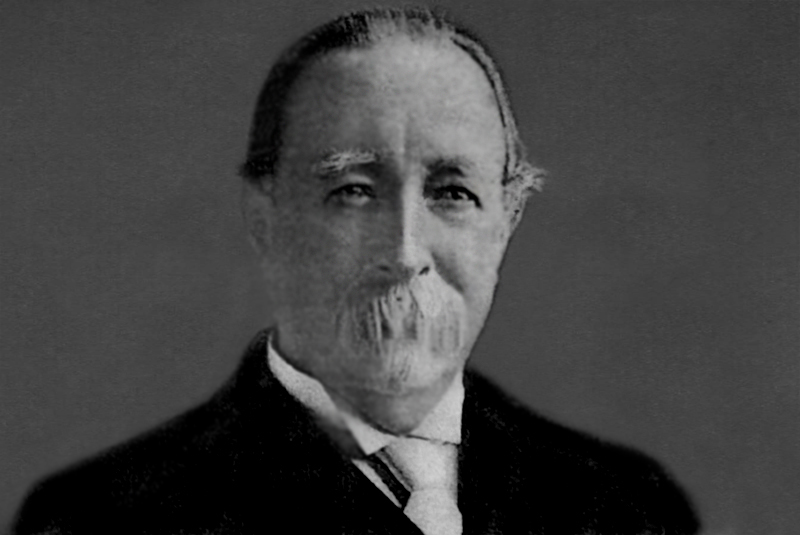
Allan Octavian Hume was born on June 6, 1829, in Montrose, Scotland. He was the son of Joseph Hume, a well-known Scottish reformer and Member of Parliament in Britain. Growing up in a politically active family shaped his liberal outlook and reformist ideas.
Hume was educated at the East India Company College in Haileybury, which trained British administrators for service in India. His education emphasized governance, law, and public administration, preparing him for a career in the Indian Civil Service.
Career in the Indian Civil Service
In 1849, Hume joined the Indian Civil Service and was posted to the North-Western Provinces, which is now part of Uttar Pradesh. During his service, he held various administrative roles and gained a reputation as an efficient and reform-minded officer.
Hume believed in educational reform and agricultural development. He worked to improve local governance and encouraged modern methods of farming. He also supported the spread of education among Indians, recognizing its importance for social progress.
The Revolt of 1857 had a significant impact on him. Witnessing the unrest and dissatisfaction among Indians, Hume realized that there was a growing need for political representation and open communication between the rulers and the people.
Growing Concern for Indian Political Rights
After decades of service, Hume became increasingly critical of British policies in India. He believed that the government was not adequately addressing Indian grievances. According to some historical accounts, he feared that continued neglect could lead to future unrest.
Hume began interacting with educated Indian leaders and intellectuals. He encouraged them to unite and express their demands through peaceful and constitutional means. He believed that a national political organization would help channel public opinion responsibly.
Founding of the Indian National Congress
In 1885, A. O. Hume took the initiative to bring together Indian leaders from different regions. With the support of prominent Indian figures such as Dadabhai Naoroji and Dinshaw Wacha, he helped establish the Indian National Congress.
The first session of the Congress was held in Bombay in December 1885. The organization initially aimed to provide a platform for dialogue between Indians and the British government. It focused on constitutional reforms, administrative improvements, and greater Indian participation in governance.
Although the Congress began as a moderate political body, it later evolved into the central force of India’s independence movement. Hume’s role in its creation remains historically significant.
Relationship with Indian Leaders
Hume maintained close relationships with early Indian nationalists. He believed in cooperation and mutual respect. Leaders such as Dadabhai Naoroji admired his support for Indian political development.
While some critics questioned his motives, many historians acknowledge that Hume genuinely supported the idea of political reform and representation. He viewed the Congress as a means to bridge the gap between British authorities and Indian citizens.
Contribution Beyond Politics
Apart from politics, A. O. Hume was also a noted ornithologist. He collected and studied bird specimens extensively across India. His contributions to the study of Indian birds earned him recognition in scientific circles.
He founded the journal “Stray Feathers,” which focused on ornithology. His scientific interests demonstrate that he was not solely a political administrator but also a scholar with diverse interests.
Retirement and Later Life
Hume retired from the Indian Civil Service in 1882 but continued to remain active in political and intellectual activities. Eventually, he returned to England, where he spent his later years.
Even after leaving India, he remained interested in the political developments initiated by the Congress. His early efforts had set in motion a movement that would eventually lead to India’s independence decades later.
Legacy and Historical Importance
A. O. Hume’s legacy is closely tied to the birth of organized political activism in India. The Indian National Congress, which he helped found, became the leading force in the struggle against colonial rule.
While debates continue about whether he intended the Congress as a safety measure for British rule or as a genuine reform initiative, his contribution to providing a political platform for Indians is widely recognized.
His life reflects the complex relationship between colonial administrators and the emerging nationalist movement.
Political Philosophy and Reformist Vision
Allan Octavian Hume was deeply influenced by liberal political ideas that were popular in Britain during the 19th century. Growing up as the son of Joseph Hume, a reform-minded Member of Parliament, he developed strong beliefs in accountability, representation, and responsible governance. These values shaped his approach during his time in India.
Hume believed that good governance required listening to the voices of the governed. He observed that educated Indians were increasingly dissatisfied with limited political participation under British rule. Rather than suppressing these concerns, he felt they should be expressed through structured and peaceful political discussion.
His reformist vision centered on constitutional methods. He did not support violent uprisings or revolutionary activity. Instead, he encouraged dialogue, petitions, and organized representation. This moderate and constitutional approach became the defining character of the early Indian National Congress.
The Context Behind the Formation of the Congress
By the 1880s, a new class of educated Indians had emerged. Many had studied in British institutions and were familiar with democratic ideas. However, their role in governance remained minimal. The British administration largely excluded Indians from higher decision-making positions.
Hume believed that ignoring the aspirations of educated Indians could create political instability. He saw the need for a national platform where grievances could be presented in a unified and organized manner. His idea was not simply administrative reform but structured political engagement.
The formation of the Indian National Congress in 1885 was the result of this vision. The organization aimed to bring together representatives from different provinces, religions, and communities. Its early demands included civil service reforms, greater legislative representation, and protection of civil rights.
Though the Congress would later become a mass movement, its early years were focused on dialogue and gradual reform.
Criticism and Historical Debate
A. O. Hume’s role in founding the Congress has been subject to historical debate. Some scholars argue that he intended the Congress as a “safety valve” to release political pressure among Indians. According to this interpretation, the British administration saw the Congress as a way to manage dissent rather than confront rebellion.
However, other historians emphasize Hume’s genuine commitment to reform. They point out his long history of advocating educational and administrative improvements for Indians. His correspondence with Indian leaders shows that he believed in empowering educated Indians to participate in governance.
Regardless of interpretation, it is widely accepted that without his organizational effort and support, the formation of an all-India political body in 1885 would have been difficult.
Administrative Contributions in India
Before entering politics, Hume had already made significant contributions as a civil servant. During his posting in Etawah, he introduced reforms aimed at improving agricultural productivity and local administration. He promoted irrigation projects and supported education for both boys and girls.
He also showed concern for famine relief and rural welfare. At a time when colonial administration often prioritized revenue collection, Hume demonstrated a broader view of public service.
His administrative career reflects a balance between official duty and reformist thought. He believed that governance required both authority and empathy.
Role in Early Congress Sessions
After the first session of the Congress in Bombay in 1885, Hume continued to guide the organization in its formative years. He helped draft agendas, coordinated communication among regional leaders, and ensured that annual sessions were conducted smoothly.
Leaders such as Dadabhai Naoroji, Womesh Chunder Bonnerjee, and Surendranath Banerjee were central figures in early Congress activities. Hume’s presence helped create a bridge between British authorities and Indian political leaders.
In its initial stage, the Congress passed resolutions seeking moderate reforms. These included expanding legislative councils, improving judicial administration, and reducing military expenditure. Though limited in scope, these demands represented the first organized political voice of Indians at the national level.
Contributions to Ornithology and Science
Beyond politics and administration, Hume made remarkable contributions to ornithology. He is often regarded as one of the founders of Indian ornithology. His extensive collection of bird specimens from across the Indian subcontinent became one of the largest of its time.
Hume’s scientific work demonstrated his dedication to research and documentation. He published detailed observations and encouraged scientific exchange. His passion for bird study was not merely a hobby but a serious intellectual pursuit.
Even after returning to England, he remained active in scientific circles. His work in ornithology reflects his diverse talents and intellectual curiosity.
Final Years and Death
After retiring from active political involvement in India, Hume returned to England. He spent his later years engaged in intellectual activities and correspondence. Though physically distant from India, he closely followed the growth of the Congress.
A. O. Hume passed away on July 31, 1912. By that time, the Congress had already expanded its influence and membership. The seeds planted in 1885 were gradually transforming into a powerful national movement.
Long-Term Legacy
The long-term legacy of A. O. Hume lies in the institutional foundation he helped establish. The Indian National Congress would later become the leading organization in India’s struggle for independence under leaders such as Mahatma Gandhi and Jawaharlal Nehru.
While Hume did not witness India’s independence in 1947, his role in initiating organized political dialogue remains historically significant. His contribution represents an early step in India’s journey toward democratic governance.
His life illustrates the complexity of colonial history. As a British official who supported Indian political organization, he occupies a unique place in both British and Indian narratives.
Today, A. O. Hume is remembered as a founding figure of India’s oldest political party and as a reform-minded administrator who believed in constitutional progress. His biography highlights the beginnings of modern political activism in India and the gradual evolution of national consciousness.
A. O. Hume stands as a unique figure in Indian history. As a British civil servant who supported the creation of a national political platform for Indians, he played a foundational role in shaping modern Indian politics.
His efforts in founding the Indian National Congress marked the beginning of a structured political movement that eventually led to independence. Beyond politics, his contributions to education, administration, and ornithology further highlight his multifaceted legacy.
Frequently Asked Questions (FAQ)
Who was A. O. Hume?
A. O. Hume was a British civil servant and reformer who helped found the Indian National Congress in 1885.
When was A. O. Hume born?
He was born on June 6, 1829, in Scotland.
Why is A. O. Hume important in Indian history?
He played a key role in establishing the Indian National Congress, which later led India’s independence movement.
What was his profession?
He served in the Indian Civil Service and was also an ornithologist.
When did A. O. Hume die?
He passed away on July 31, 1912.
This biography is part of Loaded Culture’s exploration of global figures shaping identity, leadership, and cultural evolution. Discover more profiles in our Biography category or explore broader cultural analysis on the LoadedCulture homepage, where history, influence, and modern culture connect.