
John von Neumann was one of the most influential intellectual figures of the twentieth century. A mathematician of extraordinary depth and speed, he played a central role in shaping modern computing, quantum physics, game theory, nuclear strategy, and artificial intelligence. Unlike many scholars who specialize in a single discipline, von Neumann moved fluidly across fields, often laying the foundational frameworks that others later expanded.
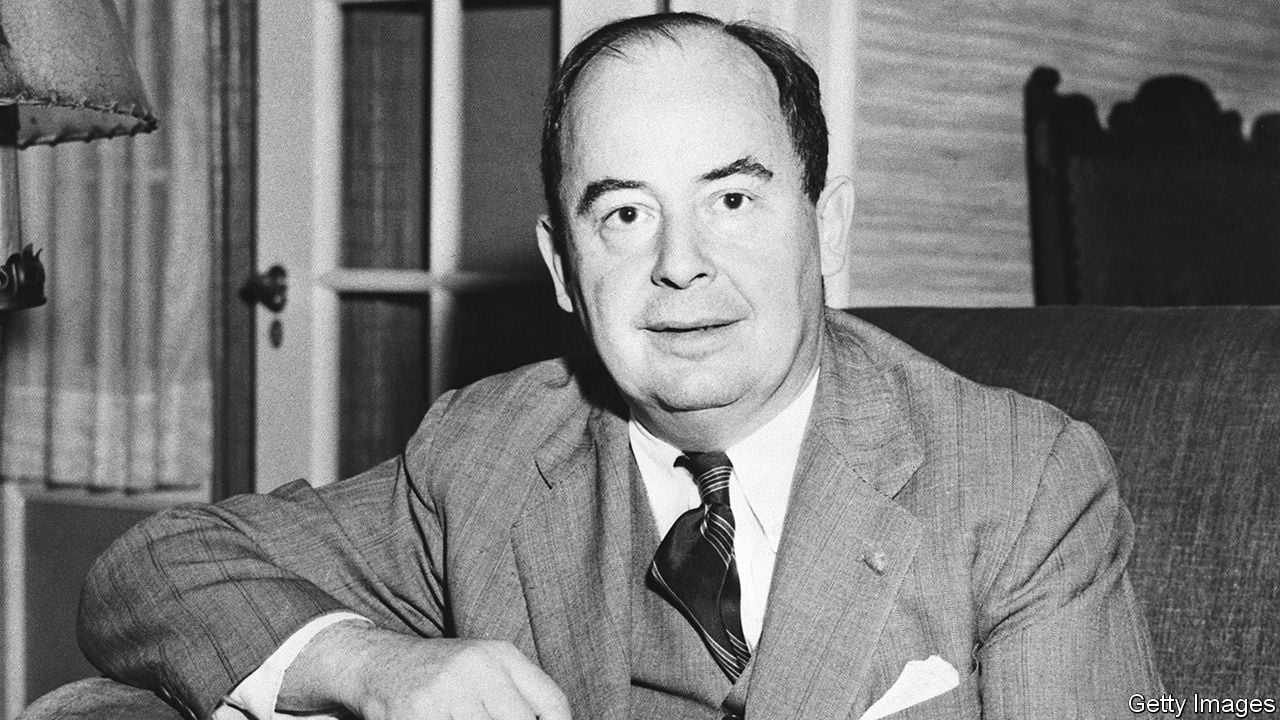
His influence is woven into everyday life. Every modern computer operates on principles he articulated. Strategic economic modeling relies on mathematical tools he developed. Even Cold War nuclear doctrine reflected his analytical thinking. To understand the architecture of the digital age, one must understand John von Neumann.
Early Life in Budapest
John von Neumann was born János Neumann on December 28, 1903, in Budapest, then part of the Austro-Hungarian Empire. He grew up in a wealthy and culturally sophisticated Jewish family. His father, Miksa Neumann, was a successful banker who later secured a noble title, allowing the family to adopt the “von” prefix.
From early childhood, von Neumann displayed astonishing intellectual abilities. By the age of six, he could perform complex arithmetic in his head. He had an extraordinary memory and could recite entire passages from books after reading them once. Family friends quickly recognized that he possessed rare mathematical talent.
He attended the prestigious Lutheran Gymnasium in Budapest, a school known for producing many scientific prodigies. The intellectual environment of early 20th-century Hungary played a significant role in shaping his analytical mindset.
Academic Formation and Dual Studies
Although von Neumann’s passion was mathematics, his father encouraged him to pursue a practical career. As a compromise, he studied chemical engineering at the Swiss Federal Institute of Technology in Zurich while simultaneously earning a doctorate in mathematics from the University of Budapest.
He completed his PhD in 1926 at the age of 23. His early research focused on set theory, mathematical logic, and foundational problems in mathematics. At the time, mathematics faced philosophical challenges concerning infinity, formal systems, and logical consistency. Influenced by David Hilbert, von Neumann contributed to strengthening the axiomatic foundations of mathematics.
His work helped clarify issues in set theory and advanced the understanding of mathematical structures that would later become crucial in physics and computing.
Contributions to Quantum Mechanics
In the 1920s and early 1930s, quantum mechanics was emerging as a revolutionary theory in physics. Scientists such as Werner Heisenberg and Erwin Schrödinger developed competing mathematical formulations of the theory.
Von Neumann unified these approaches using Hilbert space theory. His 1932 book, Mathematical Foundations of Quantum Mechanics, provided a rigorous mathematical structure for the field. He defined quantum states as vectors in Hilbert spaces and observables as linear operators, concepts that remain central to quantum theory.
His work ensured that quantum mechanics rested on solid mathematical ground, bridging physics and abstract mathematics in a lasting way.
Move to the United States
With political instability rising in Europe during the 1930s, von Neumann accepted academic invitations to the United States. In 1930, he joined Princeton University and later became one of the founding members of the Institute for Advanced Study.
At the Institute, he worked alongside intellectual giants including Albert Einstein and Kurt Gödel. The Institute became a haven for European scholars fleeing authoritarian regimes.
Von Neumann became a U.S. citizen in 1937 and increasingly engaged in research with practical applications, particularly as global tensions escalated.
Creation of Game Theory
One of von Neumann’s most transformative contributions was the creation of modern game theory. In 1944, he co-authored Theory of Games and Economic Behavior with Oskar Morgenstern.
Game theory provides mathematical tools to analyze strategic interactions where outcomes depend on decisions made by multiple participants. Von Neumann proved the minimax theorem, demonstrating that in zero-sum games, rational players can determine optimal strategies.
This work revolutionized economics and political science. Later developments by John Nash expanded the theory further.
Today, game theory influences financial markets, military strategy, artificial intelligence, and negotiation analysis.
Role in World War II and the Manhattan Project
During World War II, von Neumann became involved in military research. He joined the Manhattan Project and worked at Los Alamos Laboratory, contributing to calculations related to explosive shock waves used in atomic bomb design.
Working alongside scientists like J. Robert Oppenheimer, he applied his mathematical expertise to practical engineering challenges. His calculations were crucial in designing the implosion mechanism for the bomb dropped on Nagasaki.
Unlike some scientists who later expressed regret, von Neumann strongly supported nuclear deterrence, believing it essential for maintaining strategic balance.
The Birth of Modern Computing
Von Neumann’s most lasting contribution may be to computer science. In 1945, he wrote the “First Draft of a Report on the EDVAC,” outlining a revolutionary computer architecture.
The key concept was the stored-program design: both instructions and data would be stored in the same memory system. This became known as the von Neumann architecture and remains the foundation of most digital computers today.
This innovation allowed computers to become flexible, programmable machines rather than fixed calculators. It enabled the rapid development of software and complex computing systems.
Without his architectural model, the digital revolution would likely have developed much more slowly.
Cold War Strategy and Policy Influence
After World War II, von Neumann served on the U.S. Atomic Energy Commission. He applied game theory to nuclear strategy during the early Cold War.
His thinking contributed to concepts like mutually assured destruction and strategic deterrence. Though controversial, his analytical framework influenced military planning and defense modeling.
His approach treated international conflict as a strategic game requiring careful calculation and rational response.
Work on Artificial Intelligence and Automata
Von Neumann also explored theoretical models of self-replicating machines. His work in automata theory anticipated modern research in artificial intelligence and cellular automata.
He proposed mathematical systems capable of self-reproduction, foreshadowing discussions of machine intelligence and artificial life.
His ideas influenced later computer scientists studying complexity and digital systems.
Personality and Intellectual Style
Von Neumann was known for his quick wit, charm, and sociability. He enjoyed parties, conversation, and humor. Colleagues often described him as capable of solving complex problems in minutes that others would struggle with for weeks.
He combined theoretical brilliance with practical application, making him unique among twentieth-century scientists.
Final Years and Death
In the mid-1950s, von Neumann was diagnosed with cancer, possibly linked to radiation exposure. He died on February 8, 1957, in Washington, D.C., at age 53.
Even during illness, he continued advising government agencies and working on scientific problems.
Legacy and Lasting Impact
John von Neumann’s influence spans multiple disciplines:
-
Mathematical logic and set theory
-
Foundations of quantum mechanics
-
Creation of game theory
-
Architecture of modern computing
-
Nuclear deterrence strategy
-
Early concepts of artificial intelligence
Every time a computer runs a program, it reflects his stored-program architecture. Every time economists analyze strategic competition, they build on his game theory foundations.
He was not merely a mathematician but a central architect of the modern scientific and technological world.
Advanced Mathematical Contributions
Beyond his early work in set theory and Hilbert spaces, von Neumann made groundbreaking contributions to several advanced fields of mathematics. He pioneered operator theory, which became essential in understanding infinite-dimensional spaces, crucial for quantum mechanics. His work on ergodic theory also provided tools for analyzing dynamic systems, linking probability and statistical mechanics in ways that remain influential in physics and applied mathematics.
He contributed to functional analysis, particularly in understanding linear operators on Hilbert spaces, which later underpinned quantum mechanics’ rigorous formulation. His abstraction and precision allowed physicists and mathematicians to apply these tools across a wide range of problems, from atomic theory to complex mechanical systems.
Von Neumann also explored numerical analysis and matrix theory, which later proved essential for computational mathematics. He understood that solving real-world scientific problems often required translating continuous mathematics into a form that could be handled numerically—an insight that directly fed into his work on early computers.
Computing: Beyond the Von Neumann Architecture
While the “von Neumann architecture” is perhaps his most widely known computing contribution, his influence went far beyond hardware design. He anticipated software development concepts, such as branching, conditional operations, and sequential execution, which are foundational to modern programming.
Von Neumann recognized that computers could model complex physical and social systems. He explored numerical weather prediction, nuclear simulation, and economic modeling, pioneering the use of computers for tasks beyond mere arithmetic. His vision foresaw high-performance computing, where digital machines would simulate real-world processes faster and more accurately than humans could.
In addition, von Neumann’s ideas about self-replicating automata prefigured later concepts in robotics and artificial intelligence. His thought experiments imagined machines that could autonomously reproduce and adapt, laying theoretical foundations for AI research, cellular automata, and computational biology.
Influence on Economics and Decision Theory
The co-development of game theory with Oskar Morgenstern had a profound impact on economics and decision science. Von Neumann’s work formalized strategic thinking under conditions of uncertainty. His models helped economists understand oligopolistic competition, market strategies, and optimal resource allocation.
Beyond economics, game theory influenced political science, military strategy, and behavioral analysis. Concepts like the minimax principle and zero-sum strategies became central to understanding conflict, negotiation, and cooperation. Today, these models underpin algorithms used in AI for decision-making in complex environments, including self-driving vehicles, automated trading, and strategic simulations.
Intellectual Philosophy and Interdisciplinary Approach
Von Neumann’s brilliance lay not only in technical mastery but also in his interdisciplinary thinking. He constantly moved between abstract mathematics and applied sciences. He believed that rigorous theory could inform practical applications, a philosophy that guided his work on quantum mechanics, nuclear weapons, and computing.
His approach combined analytic precision with practical problem-solving. He could move from proving abstract theorems to designing computers or calculating explosive implosion models without missing a beat. This intellectual fluidity allowed him to influence a remarkable breadth of disciplines and remain relevant in both academic and practical realms.
Mentorship and Collaborative Work
Despite his extraordinary intellect, von Neumann was collaborative and engaged with other scholars. At Princeton and the Institute for Advanced Study, he mentored younger mathematicians, physicists, and engineers. His conversations often inspired others to explore new approaches to old problems, whether in pure mathematics, quantum theory, or computer science.
He also valued cross-disciplinary dialogue. Working with economists, engineers, and physicists, von Neumann exemplified the power of bridging academic silos, a principle that is now widely recognized as essential in modern research.
Legacy and Enduring Relevance
John von Neumann’s legacy is monumental. His mathematical frameworks remain central to quantum mechanics, operator theory, and ergodic theory. The von Neumann architecture continues to underpin nearly all modern computing devices. Game theory models guide economics, politics, and AI algorithms. His concepts of self-replicating automata inform robotics and computational biology.
Perhaps most importantly, he exemplifies the integration of theory and practice. Von Neumann demonstrated that profound abstract thought could yield transformative real-world applications, from national defense to artificial intelligence. Scholars, engineers, and scientists continue to build upon his work, making him one of the most influential figures in modern intellectual history.
Frequently Asked Questions
Who was John von Neumann?
He was a Hungarian-American mathematician and scientist whose work shaped computing, economics, physics, and military strategy.
What is von Neumann architecture?
It is a computer design in which program instructions and data share the same memory, forming the basis of most modern computers.
What is the minimax theorem?
It is a principle in game theory proving that in zero-sum games, players can determine optimal strategies to minimize potential loss.
Did von Neumann work on the atomic bomb?
Yes, he contributed mathematical calculations to the Manhattan Project.
Why is he important today?
His ideas underpin digital computing, strategic modeling, artificial intelligence theory, and modern economics.
This biography is part of Loaded Culture’s exploration of global figures shaping identity, leadership, and cultural evolution. Discover more profiles in our Biography or explore broader cultural analysis on the LoadedCulture, where history, influence, and modern culture connect.
